

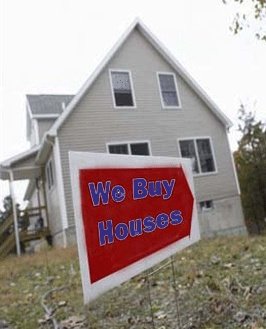
You’ve seen them stapled to telephone poles, planted at busy intersections, and taped to the back of vacant-property fences: bright yellow or red signs reading “We Buy Houses. Cash. Any Condition. Close Fast.”
For many homeowners, those few words are a lifeline. Maybe the roof is failing, a tenant has stopped paying, or an inherited property is draining your savings. The promise of a quick, no-hassle exit is appealing, and a legitimate buyer can absolutely provide it.
But a sign is an advertisement, not a contract. It has room for six or seven words, and none of them describe the terms you’ll actually be asked to sign.
The fine print on we buy houses signs, meaning everything the sign leaves out, is where the real details of your deal live: who pays which costs, how long the buyer can take to close, whether they can walk away, and whether your contract can be handed to someone else you’ve never met.
This guide explains what those signs leave unsaid. We’re not here to tell you every cash buyer is a trap. Many we buy houses companies are honest, local, and genuinely useful to sellers in tough spots.
Our goal is to help you read between the lines, ask sharper questions, and protect yourself before you sign anything.
What the Sign Promises Versus What the Contract Says
Every phrase on a typical sign has a plain-English meaning and a contract meaning, and the two aren’t always the same. Understanding the gap is the first step toward protecting yourself, and it’s the core of what the fine print on we buy houses signs is really about.
#1 “We Buy Houses.” On the sign, this suggests the person calling you will be the one buying your house. In a contract, the buyer may reserve the right to assign the agreement to someone else, so the company on the sign might never own your home.
#2 “Cash.” This implies money sitting in a bank account. In practice, “cash” can mean the buyer’s own funds, a hard-money loan, private investor money, or funds they hope to raise after finding an end buyer. The word describes the lack of a traditional mortgage, not the certainty that funds are available.
#3 “Any Condition.” This suggests they’ll take the house as-is, with no surprises. In practice, the offer is usually based on a walkthrough, and the contract may let them renegotiate or cancel if their inspection finds problems.
#4 “Close Fast.” This implies a short, guaranteed timeline. Many contracts include inspection or due-diligence periods that can stretch for weeks, with fast closing described as a goal rather than a promise.
#5 “No Fees, No Commissions.” This is often accurate in the narrow sense that you won’t pay an agent. But the buyer’s costs, risks, and profit are built into the price, and some contracts still assign closing costs, title fees, or other charges to you.
None of these gaps automatically signal bad faith. They are simply the difference between marketing language and contract language, and the fine print on we buy houses signs lives in that difference.
Why “No Commissions” Doesn’t Mean “No Costs”
The most appealing line on many signs is the idea that selling this way is free. It’s worth slowing down on that claim, because it’s partly true and partly misleading.
It’s true that you typically won’t pay a real estate agent’s commission in a direct cash sale, which could save you five to six percent of the sale price.
But the discount between your home’s retail value and the buyer’s offer pays for several things: repairs, carrying costs while they own the property, their own selling costs, and their profit. You’re not paying those costs as separate line items, yet you’re still absorbing them through the lower price.
There can also be explicit costs in the contract. Depending on the agreement, you may be responsible for title insurance, escrow fees, transfer-related charges, unpaid property taxes, utility balances, or liens.
Some contracts specify that you pay all closing costs, while others split them or assign them to the buyer. Without reading the agreement, you won’t know which applies.
A fair comparison between a cash offer and a traditional listing has to look at what you’ll actually take home, not just what’s advertised, which is one more reason the fine print on We Buy Houses signs matters.
The figure that matters is your net proceeds after every cost, which is why it pays to compare a cash buyer’s offer against what you’d net from listing before deciding.
Option Periods, Inspection Windows, and Open-Ended Timelines
One of the least visible parts of many cash home buyer contract terms is the inspection or option period, the stretch of time during which the buyer can cancel the deal for nearly any reason, often without penalty.
This clause deserves close attention. A short inspection window of a week or two is normal and reasonable. A window of 30, 60, or even 90 days effectively lets the buyer tie up your property while keeping the freedom to leave.
During that time you may be unable to sell to anyone else, and if the buyer cancels at the end, you’re back at square one with weeks or months lost.
Some agreements are structured so the buyer pays a small amount for the right to buy your property later, with no obligation to follow through. These are sometimes called option contracts. They’re not inherently improper, but they can be one-sided if the seller is bound while the buyer isn’t.
When you read the fine print on we buy houses signs in the form of an actual contract, look for three things: how long the buyer has to inspect, whether they can cancel during that time, and what you receive if they do. A genuine buyer with funds and intent to close generally doesn’t need an extremely long window to decide.
The Assignment Clause: Who Is Actually Buying Your House?
Perhaps the most important clause hiding behind a “We Buy Houses” sign is the assignment clause. It’s often a single sentence tucked into the agreement, something like “Buyer may assign this contract to a third party without seller’s consent.”
That sentence means the person you’ve been talking to might never purchase your home. Instead, they may be a wholesaler who contracts with you, then looks for another investor to buy the contract for a fee. Wholesaling is widely practiced and isn’t automatically improper, but problems arise when sellers don’t understand it.
If the wholesaler can’t find an end buyer at their target price, they may try to renegotiate your price downward or cancel the contract. If they do find a buyer, the purchase price you agreed to may be far lower than what the end buyer is paying, with the difference going to the wholesaler.
That’s a legal business model in many places, but it’s worth knowing before you sign, especially if you could have achieved a higher price through a different route.
Of all the details hidden in the fine print on we buy houses signs, this one affects your outcome the most. The simplest protection is to ask directly: “Will you be purchasing this house yourself, or do you plan to assign this contract?”
A transparent company will answer plainly. If the answer is vague, or the contract allows assignment but the buyer insists they’re the end purchaser, press for clarity.
Licensing and disclosure rules around wholesaling vary and can be complex, so it’s wise to have an attorney review any agreement that mentions assignment.
Earnest Money: Smaller Than You Might Expect

In a typical traditional sale, a buyer deposits earnest money, a good-faith payment held in escrow, that shows they’re serious. In many cash deals advertised by signs, the earnest money is small, sometimes as little as a few hundred dollars, and may be refundable during the inspection period.
Few people expect this detail from the fine print on we buy houses signs. A tiny deposit means the buyer has very little to lose if they walk away.
If a contract holds you bound for 45 days while the buyer risks only $100, the balance of risk clearly favors the buyer. A larger, clearly defined deposit, held by a neutral title company, signals stronger intent.
Pay attention to where the earnest money goes, too. It should be held by a title company or attorney, not handed to an individual or the company directly. And read the language about when it is refundable and when it’s forfeited, because those terms show whose interests the contract protects.
The Re-Trade: When the Price Changes After You Sign
A frequent complaint from sellers is the re-trade. A buyer makes an attractive offer, gets the contract signed, then reduces the price after the inspection or due-diligence period, citing “unexpected” repairs, title concerns, or market shifts.
Some price adjustments are legitimate. Inspections can uncover real problems that weren’t visible, and a buyer who is honest about it will explain the issue, show estimates, and let you decide.
The warning sign is a large, unexplained reduction timed to the moment you’ve stopped marketing the home and feel committed.
You can reduce the risk of a re-trade by asking for a thorough walkthrough before signing, so the buyer can’t claim surprise later, and by reading the contract’s language on price adjustments.
Look for clauses that allow the buyer to renegotiate “at their sole discretion” or to cancel if they’re “not satisfied.” Those phrases give them leverage that a fixed-price, short-inspection contract would not.
Re-trades are among the most common complaints tied to the fine print on we buy houses signs. Keep in mind that your options are strongest before you sign.
After you sign, and especially if your home is tied up under contract, you may feel pressure to accept a worse deal. That pressure is exactly what makes the re-trade effective.
Recorded Claims on Your Title
Another detail that rarely appears on a sign is that signing a contract can allow the buyer to record a document with the county, often called a memorandum of contract or similar notice, putting the public on notice that they have an interest in your property.
Recording such a document isn’t necessarily improper. It can protect a legitimate buyer’s interest. But it can also complicate your ability to sell to someone else if the buyer later cancels or disappears, because the recorded document may cloud your title until it’s formally released.
Ask whether the contract authorizes recording anything against your property, and what happens if the deal doesn’t close. A fair agreement will require the buyer to release any recorded claim promptly if they cancel. If there’s no such language, you could be stuck chasing a release while your property remains encumbered.
“As-Is” Language and What It Really Covers
Many we buy houses companies emphasize that they purchase homes “as-is,” which sounds like a promise that you won’t have to fix or clean anything. In most cases, that’s accurate. But “as-is” doesn’t erase every obligation.
You may still be responsible for disclosing known defects. You may be responsible for removing certain items, resolving liens, paying off utilities, or clearing the property by a specific date.
The contract might specify the condition the home must be in at closing, such as being free of trash, personal belongings, or tenants. If you don’t meet those conditions, the buyer may have the right to reduce the price or cancel.
Read the section on possession and condition carefully. If you’re attached to certain fixtures, appliances, or belongings, make sure the contract says what stays and what goes. Don’t assume the buyer will let you take what you planned to take, or leave what you planned to leave.
How to Read the Fine Print on We Buy Houses Signs and Contracts
Reading a contract isn’t about being a legal expert. It’s about knowing where to look and what to question. Here are the key areas to check, presented as numbered steps so you can work through them in order.
#1 Identify the parties. Confirm exactly who the buyer is: a person, a company, or “and/or assigns.” Check whether the company name matches the name on any marketing materials, and whether it’s a registered business.
#2 Check the purchase price and how it can change. Look for any clause that lets the buyer adjust the price after signing, and understand under what conditions.
#3 Review the inspection or option period. Note how long it lasts, whether the buyer can cancel, and what, if anything, you receive if they do.
#4 Look for assignment language. Find any sentence about assigning or transferring the contract, and ask what it means for you.
#5 Examine the earnest money terms. See how much is deposited, who holds it, and when it’s refundable.
#6 Confirm who pays closing costs. Look for who covers title insurance, escrow fees, transfer charges, and prorated taxes.
#7 Check for recording rights. See whether the buyer can record a notice against your property and what’s required to release it if the deal falls through.
#8 Verify the closing timeline and location. Make sure there’s a specific closing date or window, and that closing will be handled through a title company or attorney.
#9 Review possession and condition requirements. Understand what you must do with the property, belongings, and occupants before closing.
#10 Look for cancellation and penalty clauses. Check which side can cancel, under what circumstances, and what penalties, if any, apply to you.
If any section is unclear, circle it and ask. If the buyer is unwilling to explain or encourages you to skip over it, take that as information about how the relationship may go.
When Selling Fast for Cash Is the Right Move
None of this is meant to talk you out of a cash sale. If you need to sell my house fast for cash because of a relocation, financial strain, an unwanted inheritance, or a property in poor condition, a direct sale can be exactly the right solution.
It spares you repairs, showings, inspections tied to a buyer’s financing, and months of uncertainty.
The goal is to choose a buyer deliberately. Compare at least two cash offers. Get a listing opinion from a local agent so you know what a traditional route might net.
Weigh speed and certainty against price. Only sign an agreement you understand, with terms reviewed by someone on your side.
Red Flags That Deserve Extra Caution
Some warning signs show up repeatedly in complaints about cash buyers. They aren’t proof of wrongdoing on their own, but they justify slowing down.
#1 A buyer who pressures you to sign immediately, using deadlines like “this offer expires tonight,” is trying to reduce your time to think and consult others.
#2 A buyer who won’t provide proof of funds, or becomes evasive when asked, may not have the money they claim.
#3 A buyer who asks for any upfront fee from you, whether labeled as processing, application, or inspection, is asking you to pay before they do.
#4 A buyer who discourages legal review or insists on a closing agent you can’t verify is steering you away from protections that exist for your benefit.
#5 A contract with unusually long timelines, broad cancellation rights for the buyer, or unexplained recording permissions deserves a closer look from an attorney.
Frequently Asked Questions
Does the fine print on we buy houses signs mean I’ll be charged hidden fees? Not necessarily. Many buyers are transparent about costs. The point is that the sign itself can’t tell you who pays closing costs or what other charges may apply, so you need to read the contract to find out.
What is the biggest red flag in a cash buyer’s contract? There isn’t just one, but a combination of a long inspection window, a tiny earnest deposit, broad assignment rights, and a one-sided cancellation clause tips the risk balance heavily toward the buyer.
Should I have a lawyer review a cash home buyer contract? It’s strongly recommended, especially if the agreement mentions assignment, recording, option periods, or anything other than a simple purchase at closing. A short consultation costs far less than an unwinding dispute.
Final Thoughts
A “We Buy Houses” sign is a conversation starter, not a contract. It tells you someone is interested, and it may well lead you to a fair, fast sale.
But it can’t tell you who pays which costs, whether the buyer can cancel, whether your agreement can be assigned, or whether anything will be recorded against your title.
Reading the fine print on we buy houses signs means looking past the slogan to the actual terms: the option period, the assignment clause, the earnest money, the closing agent, and the conditions you’ll need to meet.
Do that, ask direct questions, get independent advice, and compare more than one option. With the right preparation, you can take advantage of what honest buyers offer while avoiding the pitfalls that catch less prepared sellers.