

Selling a house can be a lengthy process. But sometimes, speed is essential.
A quick house sale might be the solution. It allows homeowners to sell their property faster than usual.
This approach is often chosen by those facing urgent situations. Financial difficulties or sudden relocations are common reasons.
Quick sales typically involve cash buyers or real estate investors. These buyers can close deals swiftly.
However, a quick sale might mean accepting a lower price. It’s crucial to weigh the pros and cons.
Preparing your home can make a difference. Simple steps like decluttering and cleaning can speed up the process.
Pricing your home competitively is also key. It attracts more potential buyers quickly.
Understanding the quick sale process is vital. This guide will help you navigate the journey.
Understanding Quick House Sales
A quick sale on a house means selling within a reduced timeframe. Traditional home sales often take months to complete.
In contrast, a quick house sale might wrap up in days or weeks. This urgency appeals to many homeowners.
Different paths can lead to a quick sale. Each has unique advantages and potential drawbacks.
One common option involves selling to cash buyers. These investors are prepared to purchase homes outright.
Cash buyers streamline the process by eliminating the need for a mortgage. This can significantly speed up the sale.
Here’s a brief look at various quick sale paths:
- Cash Buyers: Offer convenience and speed.
- iBuyers and Online Platforms: Use technology for fast transactions.
- Auctions: Create urgency but come with risks.
- Specialized Estate Agents: Provide market expertise for fast closures.
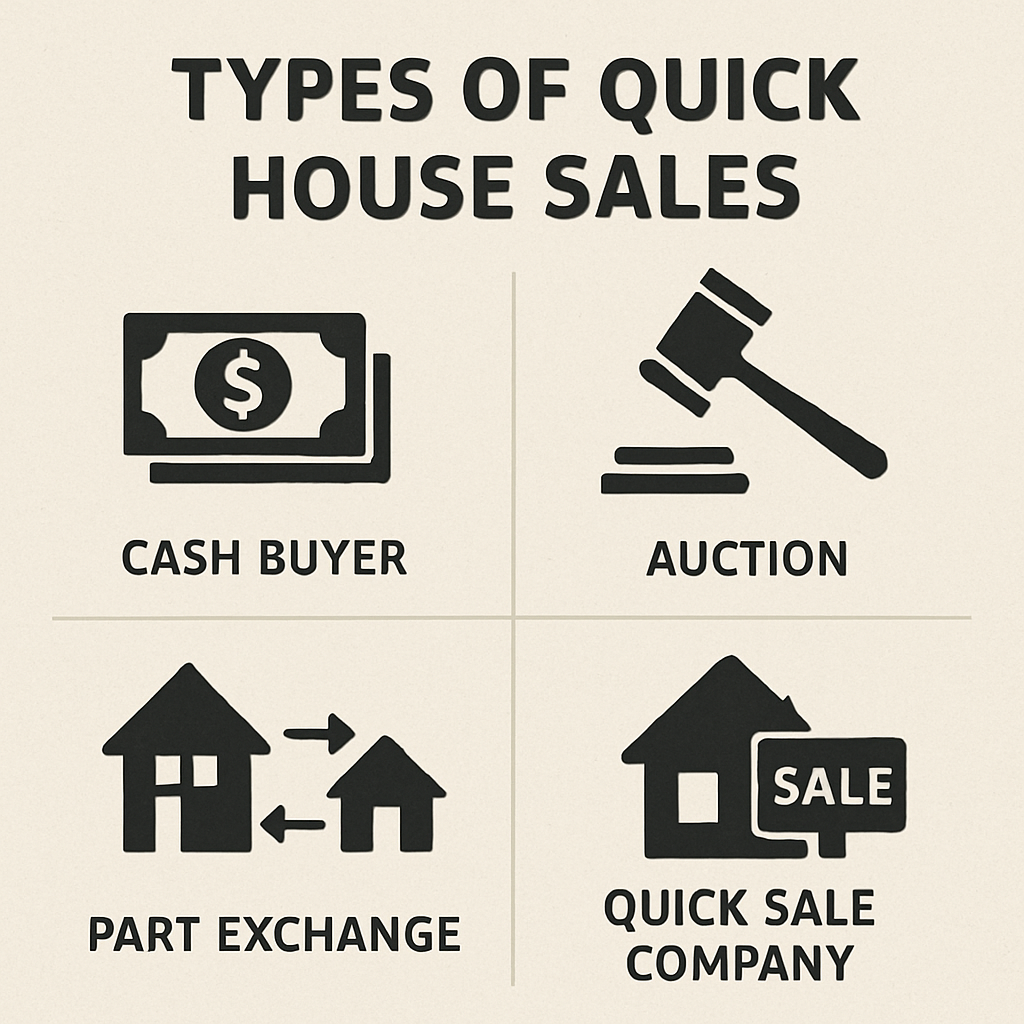
It’s essential to understand that quick sales may mean compromising on price. Higher speed can often translate into accepting lower offers.
Some homeowners choose this route to avoid pressing financial issues. Others need the agility to relocate swiftly.
Knowing what a quick sale entails helps make informed decisions. This ensures sellers align their strategies with personal goals. Understanding each option clarifies which best suits your situation.
Selling a home quickly is possible, but careful consideration is necessary. Take time to evaluate your circumstances and select the path that fits.
Why Homeowners Choose a Quick Sale
Homeowners opt for a quick sale for many personal and financial reasons. Urgency often drives this choice.
Relocation is a common factor. Job transfers or family commitments may require a rapid move.
Financial distress can also motivate a quick sale. Selling quickly can help avoid foreclosure or mounting debts.
Some homeowners face personal circumstances like divorce. In these cases, a fast sale provides a clean slate.
Selling a house quickly frees up cash tied up in property. This flexibility helps with future investments or expenses.
Reasons to choose a quick sale include:
- Job Relocation: Speed is crucial for seamless transitions.
- Financial Difficulties: Fast cash prevents situations from worsening.
- Divorce or Separation: Quick closure aids personal resolution.
- Estate Sale: Efficiently handle inherited properties.

Emotional stress can be a driving factor, too. A fast transaction can ease the burdens of uncertainty.
However, potential sellers must weigh their options. Quick sales involve speed but may affect financial returns. Understanding your priorities will guide you to the right decision. Evaluate the urgency versus the best possible outcome for your assets.
How Does a Quick Sale on a House Work?
A quick sale on a house involves a streamlined process. The goal is to shorten the time from listing to closing.
The first step is contacting buyers interested in fast purchases. These are often cash buyers or investors ready to act quickly.
Buyers assess the property’s value, considering its condition and market trends. This evaluation is usually rapid.
The homeowner typically receives a cash offer. This eliminates the wait associated with mortgage approvals.
Once both parties agree, legal documents are drawn up. This step ensures the sale is binding and transparent.
The closing date is much sooner than traditional sales. Often, the completion happens in days or weeks, not months.
Steps involved in a quick sale:
- Identify Buyers: Cash buyers or investors are ideal.
- Property Evaluation: Quick assessment to determine offer.
- Receive Offer: Usually straightforward, cash-based.
- Close Deal: Sign contracts, finalize sale.
by Eric Prouzet (https://unsplash.com/@eprouzet)
Quick sales are usually less complex. Fewer contingencies mean fewer delays, allowing faster completion.
This process may seem simple, but it’s essential to ensure all legal aspects are correct. Missteps can lead to complications. Hiring experienced professionals can mitigate risks and promote a smoother transaction. Always consult a professional, whether a lawyer or a real estate agent, to cover all bases effectively.
Types of Quick House Sale Options
There are several pathways for a quick house sale. Each has distinct features catering to various needs.
Cash buyers are a popular choice. They offer quick, hassle-free transactions.
iBuyers and online platforms have modernized the selling process. They provide instant offers using technology.
Auctions represent a traditional but effective method. Bidders often aim to snag properties fast.
Estate agents specializing in fast sales help facilitate these transactions. They have networks and strategies to expedite the sale.
Choosing the right option depends on your priorities. Speed, convenience, and price are key factors.
Each type comes with its pros and cons. Weigh these to determine the best fit for your situation.
Consider your objectives to decide the best route:
- Cash Buyers: Speed and simplicity.
- iBuyers: Tech-driven, quick offers.
- Auctions: Competitive bidding.
- Specialist Agents: Expertise in fast sales.
by positive tourettes (https://unsplash.com/@positivetourettes)
Understanding each type helps in making an informed decision. Evaluate your circumstances to choose the most suitable option.
Cash Buyers
Cash buyers bring speed and certainty to home sales. They typically have funds ready and can bypass traditional processes.
This method stands out because of its simplicity. You avoid mortgage delays and enjoy a rapid sale completion.
The appeal lies in minimal contingencies. Cash buyers usually accept the property in its current condition.
However, offers may be lower than market value. This trade-off is for the benefit of an immediate sale.
Essentials for dealing with cash buyers:
- Cash Readiness: Immediate funding.
- Minimal Negotiation: Faster agreement.
- No Repairs Needed: Accepts as-is.
by rupixen (https://unsplash.com/@rupixen)
Despite a possible reduced price, many homeowners favor this route. The speed and ease often outweigh other concerns.
iBuyers and Online Platforms
iBuyers use technology to simplify home sales. They offer instant prices based on algorithms and market data.
These platforms emphasize convenience. Homeowners receive offers without hosting open houses or showings.
iBuyers aim to reduce the time from offer to completion. Transactions can finalize in days, not weeks.
However, service fees and lower offers are common. It’s important to consider these costs before proceeding.
Key features of iBuyers:
- Instant Offers: Algorithm-based pricing.
- No Showings: Privacy advantage.
- Fast Transactions: Quick closure.
For those valuing speed and modern convenience, iBuyers are a viable choice. Always compare offers to traditional methods for balance.
Auctions
Auctions provide a dynamic selling environment. They attract competitive buyers eager to purchase quickly.
While auctions promise fast results, prices can vary. The bidding process determines the final sale price.
Main aspects of auctions:
- Competitive Bidding: May raise prices.
- Set Selling Date: Predictable timeline.
Auctions are suitable for those open to price fluctuations and seeking quick sales.
Estate Agents Specializing in Fast Sales
Specialist estate agents focus on rapid sales. They leverage extensive networks and market insights.
Their expertise lies in identifying fast-sale opportunities. From attracting cash buyers to launching effective marketing, they handle it all.
Responsibilities of specialized agents:
- Network Access: Connects to quick buyers.
- Strategy Development: Tailors marketing efforts.
With experienced agents, homeowners optimize sale speed. They ensure each step is efficiently managed.
Pros and Cons of a Quick Sale on a House
Opting for a quick sale comes with both benefits and drawbacks. Understanding these is crucial before deciding.
One major advantage is the speed of the transaction. Quick sales often wrap up within days or weeks. Homeowners appreciate this when time is limited.
Another plus is simplicity. Quick sales typically involve fewer steps and less paperwork. This reduces the overall stress of selling.
Yet, the simplicity comes at a cost. Quick sale prices can be lower than traditional methods. Sellers trade a rapid process for potentially lower profits.
Homeowners should also consider market value. Quick sales often attract offers below the property’s full worth. Evaluate if the immediate need outweighs potential financial loss.
Not all buyers value home improvements. Many quick sale buyers purchase properties “as-is.” This reduces repair costs but affects the sale price.
Essential pros of quick sales:
- Speed: Rapid closure.
- Less Complication: Simplified process.
Important cons to keep in mind:
- Price Sacrifice: Lower offers.
- Market Value: Potential undervaluation.
by Possessed Photography (https://unsplash.com/@possessedphotography)
Consider your motivations for selling quickly. Weigh the pros and cons in light of your personal situation. A quick sale isn’t inherently good or bad; it depends on your needs and circumstances.
Preparing Your Home for a Fast Home Sale
Getting your home ready for a quick sale demands strategic preparation. Even in a fast-paced market, the condition of your home matters.
First, focus on decluttering your spaces. Clear out unnecessary items to make rooms appear larger. This allows potential buyers to envision living there.
Next, prioritize cleanliness. A clean home leaves a positive impression and suggests good maintenance. Ensure kitchens and bathrooms sparkle.
Minor repairs can make a big difference. Fix leaky faucets, replace broken tiles, and address any obvious imperfections. These small fixes enhance your home’s appeal.
Neutral decor is advisable. Consider painting walls in soothing, neutral tones. This can help potential buyers imagine personalizing the space.
Staging may also accelerate a sale. Rearrange furniture to highlight your home’s strengths. A well-staged home often sells faster than one that isn’t.
Crucial steps to prepare:
- Declutter: Streamline belongings.
- Clean: Ensure a spotless presentation.
Additional suggestions:
- Repair: Make minor fixes.
- Decor: Opt for neutral colors.
by Roger Starnes Sr (https://unsplash.com/@rstar50)
Consider arranging for professional photography. High-quality images can significantly impact online buyer interest. Buyers often browse homes online before visiting in person. A well-prepared and presented home can lead to a swift sale.
Pricing Strategies for a Quick Sale
Pricing your home right is key to a quick sale. Overpricing can deter buyers, while competitive pricing attracts interest.
Firstly, research local market trends. Understanding what similar homes in your area sell for helps set a realistic price. Consult recent sales data for guidance.
Consider pricing slightly below market value. This strategy can quickly draw in more potential buyers, sparking interest and even a bidding war. Remember, an attractive price often leads to multiple offers.
Engage with real estate professionals. Their expertise can be invaluable in identifying the optimal pricing strategy for your situation.
Key pricing tips to remember:
- Research Market: Know local sales trends.
- Competitive Pricing: Consider setting below market value.
- Professional Advice: Utilize real estate expertise.
by Erik Mclean (https://unsplash.com/@introspectivedsgn)
Implementing these strategies can position your home as a top choice for buyers. This approach increases the chances of a successful fast home sale.
Marketing Your Property for a Speedy House Sale
Effective marketing is crucial for selling your home swiftly. Start by improving your property’s visual appeal. First impressions matter, so consider professional photography to showcase your home’s best features.
Next, focus on online listings. Craft compelling descriptions highlighting unique selling points. A well-written description can captivate potential buyers and encourage viewings.
Leverage social media platforms to expand your reach. Share your listing across Facebook, Instagram, and other platforms. Family and friends can also share, widening your audience further.
Don’t underestimate traditional methods. Signboards in your neighborhood can attract local buyers or investors who are ready to purchase quickly.
Some marketing tactics include:
- Professional Photography: Create attractive images.
- Engaging Descriptions: Craft compelling online listings.
- Social Media: Maximize reach via various platforms.
- Local Advertising: Use signboards for neighborhood exposure.
by Michael Prewett (https://unsplash.com/@catvideo)
Combining these strategies can significantly enhance your chances for a rapid home sale. By increasing visibility, you attract more interest and potential offers.
Legal and Financial Considerations
Navigating the legal and financial complexities of a quick house sale is crucial. Understanding contracts and agreements is essential. Ensure all terms and conditions are clear before proceeding with a sale.
Consulting with a real estate attorney can provide valuable insights. They can help review documents to avoid any legal pitfalls. An expert’s guidance safeguards your interests during the transaction.
Financial implications deserve careful attention, too. Quick sales often involve a lower sale price. Assessing your financial situation thoroughly will help you make informed decisions.
Important considerations include:
- Contract Reviews: Seek legal guidance.
- Clear Terms: Ensure transparency in agreements.
- Financial Impact: Evaluate potential loss in sale price.
by Jakub Żerdzicki (https://unsplash.com/@jakubzerdzicki)
Awareness of these aspects helps mitigate risks associated with fast home sales. It empowers you to navigate the process with confidence and clarity. Taking proactive steps ensures a smooth, secure transaction.
Common Pitfalls and How to Avoid Them
Quick house sales, while efficient, come with potential pitfalls. Recognizing common mistakes can help you sidestep them. Being proactive ensures a smoother transaction.
One major pitfall is accepting the first offer too hastily. It’s tempting to close fast, but this may lead to underselling your home. Consider evaluating multiple offers to find the best match.
Not understanding the buyer’s background can also be costly. Ensure you’re dealing with legitimate and reputable buyers. This reduces the risks of scams or unreliable transactions.
by Scott Webb (https://unsplash.com/@scottwebb)
Overlooking the property’s condition is another common mistake. Thorough inspections can highlight issues that may hinder a sale. Addressing minor repairs beforehand can make a significant difference.
Key strategies to avoid pitfalls include:
- Evaluate Offers: Review several offers before making a choice.
- Verify Buyers: Check credentials for legitimacy.
- Inspect Property: Identify and fix potential issues.
By applying these strategies, you can avoid potential setbacks. This approach helps you achieve a successful and efficient quick sale, minimizing stress and maximizing outcomes.
How to Choose a Reputable Quick Sale Company
Selecting the right company is crucial for a successful, quick house sale. Start by researching several firms in the industry. Look for reviews and testimonials to gauge their reputation.
Ensure the company you choose is transparent in its dealings. They should provide clear terms and conditions upfront. Transparency is essential to avoid hidden fees or unexpected costs.
by Kelly Sikkema (https://unsplash.com/@kellysikkema)
Consider asking the following questions when assessing a company:
- What is their sales track record?
- Do they have any industry certifications or accreditations?
- Can they provide references from past clients?
Prioritizing these factors will guide you to a credible choice. A dependable, quick sale company should make the process smooth and trustworthy.
Frequently Asked Questions About Quick House Sales
Quick house sales can be confusing for many homeowners. Let’s tackle some common questions to clarify the process. Understanding these can make your journey smoother and more predictable.
Many homeowners wonder if they will receive market value for a quick sale. Generally, selling quickly may mean accepting a reduced offer. Speed often comes at the expense of achieving the full market price.
Another frequent question is about the timeline. How fast can the process be completed? Quick house sales can conclude in as little as a few days to weeks. This speed depends on your chosen method and the buyer’s readiness.
Here are some additional points homeowners often ask about:
- Are quick sales legal?
- What paperwork is involved?
- Is my home’s condition a significant factor?
Knowing these details can help you make well-informed choices.
Key Takeaways: Is a Quick Sale Right for You?
Deciding on a quick sale involves weighing various factors. It requires balancing your need for speed and the financial implications. Carefully assess your situation before proceeding.
Determine if you’re comfortable potentially accepting a lower price. This consideration is crucial since speed often comes with a trade-off. A quick sale might suit you if avoiding foreclosure or relocating quickly is essential.
Here are some key points to consider:
- Urgency of financial needs
- Willingness to accept a lower price
- Property’s current condition
- Readiness for a fast-paced process
Think about emotional factors too. Leaving a long-time home swiftly can be challenging. Reflect on these aspects to make an informed decision. Ultimately, a quick sale can be beneficial if time is your priority.
Conclusion
Understanding the concept of a quick house sale is crucial for homeowners in urgent situations. It presents a viable option for those prioritizing speed over price. Quick sales offer solutions for financial distress, relocation, or avoiding foreclosure.
However, they come with trade-offs, notably a potentially reduced sale price. Weighing the benefits and risks is essential before making such a significant decision. Conduct thorough research and consider consulting professionals in the field.
Ultimately, a quick sale can provide timely relief. But it requires careful evaluation of personal circumstances and market conditions. With informed choices, homeowners can navigate the process successfully.