

If you’ve ever wondered what happens behind the scenes when you request a Dynasty Home Buyers cash offer, you’re not alone.
Thousands of homeowners across the country are choosing to sell directly to cash buyers instead of listing on the open market — and for good reason. The process is faster and simpler, and it removes the uncertainty that comes with traditional real estate transactions.
But one question keeps coming up: How exactly does Dynasty Home Buyers calculate what they’ll pay for your property?
This post pulls back the curtain on the entire process. By the time you finish reading, you’ll understand every factor that goes into a Dynasty Home Buyers cash offer, why the number is what it is, and how to position your home to get the strongest possible figure.
What Is a Dynasty Home Buyer’s Cash Offer and How Does It Work?
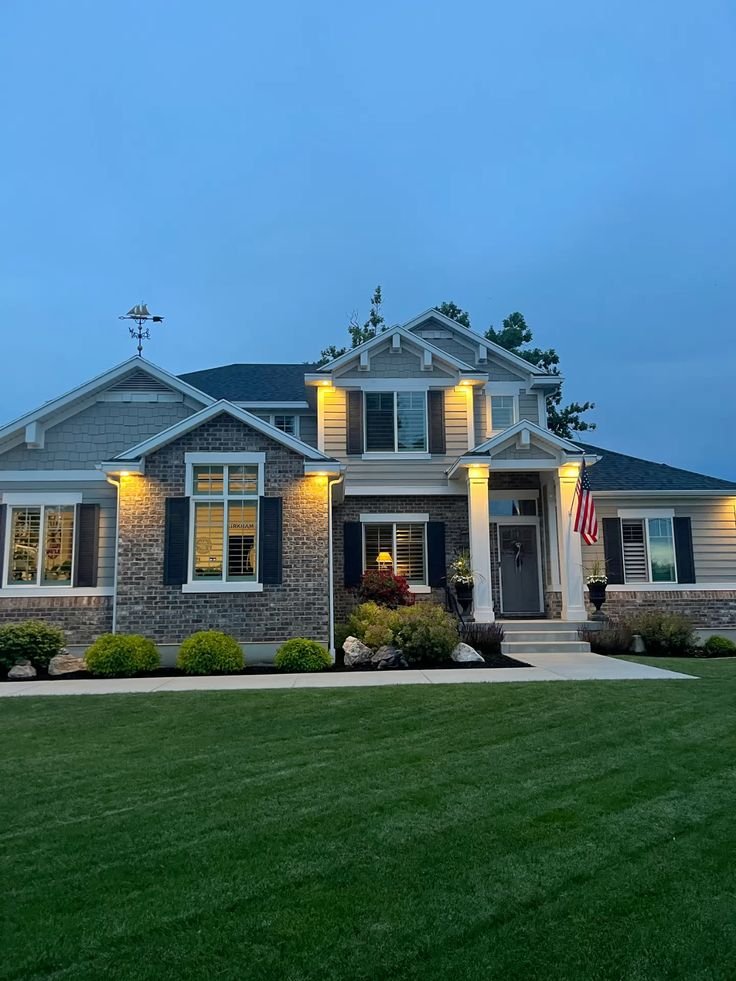
A Dynasty Buys Homes cash offer is a direct, no-obligation proposal to purchase your home without the involvement of banks, lenders, appraisers, or traditional mortgage timelines.
When you reach out to Dynasty Buys Homes, their team begins a structured evaluation process that results in a firm number — typically within 24 to 48 hours.
Unlike listing your home with an agent and waiting weeks or months for a buyer, this model is designed for speed and certainty. There are no open houses, no staging requirements, no repair demands, and no financing contingencies that can fall through at the last minute.
The Dynasty Buys Homes cash offer process typically follows these steps:
#1. You contact Dynasty Home Buyers and share basic details about your property.
#2. Their team reviews the property information and local market data.
#3. A representative may schedule a brief walkthrough or virtual assessment.
#4. You receive a cash offer, usually within one to two business days.
#5. If you accept, closing can happen in as few as seven days.
Simple on the surface — but the math underneath is anything but guesswork.
The Foundation: After Repair Value (ARV)
Every Dynasty Buys Homes cash offer starts with one core number: the After Repair Value, or ARV. This is the estimated market value of your home after all necessary repairs and renovations have been completed.
To calculate ARV, Dynasty Home Buyers analysts study comparable sales — commonly called “comps” — in your immediate neighborhood.
These are recently sold homes that are similar in size, age, layout, and condition to what your property would look like once fully updated.
The goal is to establish a ceiling: what is the realistic best-case price this home could achieve on the open market in move-in-ready condition?
ARV is the single most important input into any Dynasty Buys Homes cash offer calculation. Every other factor either subtracts from this number or shapes how it’s interpreted.
Factor #1: Estimated Repair and Renovation Costs
Once ARV is established, the next step is determining how much it will cost to bring the property to that standard.
This is where many sellers are surprised — not because the estimates are inflated, but because the scope of work is often more extensive than they realized.
professional reviewing a property for a Dynasty Home Buyers cash offer will assess:
● Roof condition — age, missing shingles, evidence of leaks or water damage
● Foundation integrity — cracks, settling, drainage concerns
● HVAC systems — age and efficiency of heating and cooling units
● Plumbing — pipe condition, water heater age, any signs of leaks
● Electrical — panel capacity, wiring condition, code compliance
● Kitchen and bathrooms — fixture age, cabinetry, flooring, tile
● Windows and doors — single-pane glass, broken seals, damaged frames
● Cosmetic updates — paint, flooring, landscaping, curb appeal
Even a home that looks “fine” to the naked eye can carry $30,000 to $80,000 or more in deferred maintenance and cosmetic work. These costs are deducted directly from the ARV when calculating a Dynasty Buys Homes cash offer.
Factor #2: Holding Costs and Carrying Expenses
Cash buyers like Dynasty Buys Homes aren’t just purchasing a home — they’re taking on a business investment that carries real costs over time. From the day of purchase to the day of resale, the property generates ongoing expenses even while sitting empty.
These holding costs typically include:
● Property taxes — prorated for however long the home is held
● Homeowner’s insurance — required to protect the asset during renovation
● Utilities — keeping the lights, water, and climate control functional during work
● Loan or capital costs — even cash buyers have an opportunity cost or financing structure
● HOA fees — if applicable in your community
● Security — protecting a vacant, under-renovation property from vandalism or theft
On average, holding costs run between 1% and 2% of the property’s value per month. For a $300,000 home held for four months, that’s $12,000 to $24,000 in expenses before any profit is considered. These costs are factored into every Dynasty Home Buyers cash offer to ensure the transaction is financially viable.
Factor #3: Transaction and Closing Costs
Buying and selling real estate comes with unavoidable transactional costs on both sides. When Dynasty Buys Homes eventually resells the renovated property, they’ll pay:
● Agent commissions (typically 5–6% of the sale price)
● Title insurance and escrow fees
● Transfer taxes and recording fees
● Staging and marketing costs
● Negotiated buyer concessions
These resale costs typically add up to 8–12% of the eventual sale price and must be accounted for when structuring a Dynasty Buys Homes cash offer.
If a renovated home sells for $300,000 and transaction costs total $27,000, that $27,000 must be modeled into the original offer.
Factor #4: Profit Margin
Dynasty Buys Homes is a business, and like any business, it needs to operate sustainably to continue serving homeowners who need fast, fair solutions.
A standard cash buyer in the industry targets a profit margin of 10–15% of ARV to account for risk, unexpected costs, and operational overhead.
This margin isn’t hidden or deceptive — it’s the mechanism that allows companies like Dynasty Buys Homes to remain available for homeowners who need to sell quickly due to divorce, foreclosure, inheritance, job relocation, financial hardship, or simply the desire for a hassle-free experience.
Understanding this margin helps you contextualize your Dynasty Home Buyers cash offer accurately: you’re not getting market value, but you are getting speed, certainty, zero repairs, and zero agent fees — each of which has real monetary value.
The Formula in Practice
When all four factors are combined, the cash offer formula looks like this:
Cash Offer = ARV − Repair Costs − Holding Costs − Transaction Costs − Profit Margin
Here’s a simplified example:
| Variable | Amount |
| After Repair Value (ARV) | $300,000 |
| Estimated Repair Costs | $40,000 |
| Holding Costs (4 months) | $18,000 |
| Transaction/Closing Costs | $27,000 |
| Profit Margin (10%) | $30,000 |
| Dynasty Home Buyers Cash Offer | ≈ $185,000 |
In this scenario, a seller with a distressed home worth $300,000 after renovation might receive a Dynasty Buys Homes cash offer of $185,000.
That number might feel low at first — until you consider that a traditional sale of that same property would require $40,000 in repairs upfront, 3–6 months on the market, agent commissions, and the constant risk of deals falling through.
Why Location Matters to Your Dynasty Buys Homes Cash Offer

Not all markets are created equal, and the same formula produces very different results depending on where your home is located. Dynasty Home Buyers evaluates location on several levels:
Macro-market conditions: Are home prices in your metro area rising, flat, or declining? A hot seller’s market raises ARV projections. A cooling market reduces them and increases the risk premium baked into the offer.
Neighborhood demand: Comps in a high-demand zip code will be higher than in a slower-moving area, even for identical properties. Buyer demand directly affects how quickly the renovated home can be resold, which impacts holding cost estimates.
Local renovation costs: Labor and materials vary significantly by region. A kitchen renovation that costs $18,000 in one city might run $28,000 in a higher cost-of-living market. This directly impacts the repair cost deduction in the Dynasty Buys Homes cash offer formula.
What You Can Do to Strengthen Your Offer
While the formula is largely driven by objective data, there are a few things sellers can do to position themselves for the strongest possible Dynasty Home Buyers cash offer:
Be transparent about the property’s condition. Surprises discovered during the walkthrough can cause an offer to be revised downward. If you disclose known issues up front, the review process is smoother, and there’s less risk of post-inspection reductions.
Gather documentation. Any records of recent updates — a new roof, HVAC replacement, or recent plumbing work — can reduce the estimated repair scope and increase your offer.
Be flexible on the closing timeline. In some cases, a longer or shorter closing window can improve the terms offered, depending on Dynasty Buys Homes’ current portfolio and operational schedule.
Request a detailed breakdown. A reputable cash buyer should be willing to walk you through the assumptions behind their offer. Understanding the math makes the number feel less arbitrary and helps you make an informed decision.
The Real Value Comparison: Cash Offer vs. Traditional Sale
The question every seller should ask isn’t just “Is this offer fair?” but rather “What will I actually walk away with after each option?”
Consider a traditional sale of the same $300,000 ARV home:
| Expense | Traditional Sale | Dynasty Buys Homes Cash Offer |
| Repairs before listing | $40,000 | $0 |
| Agent Commissions (6%) | $18,000 | $0 |
| Closing costs | $4,500 | $0 |
| Holding Costs while listed (3 months) | $9,000 | $0 |
| Risk of deal falling through | High | None |
| Net Proceeds | $228,500 | $185,000 |
The gap is real — roughly $43,500 in this example. But so is the trade-off in time, stress, upfront capital, and uncertainty.
For many sellers, a Dynasty Buys Homes cash offer represents a fair exchange of some equity for a significant gain in simplicity and speed.
Common Misconceptions About Cash Offers
“Cash buyers lowball everyone.” In reality, a well-calculated Dynasty Home Buyers cash offer is a transparent reflection of math, not manipulation.
The offer accounts for real costs that any buyer — including you — would face in renovating and reselling the home.
“I can negotiate a higher price just like with a traditional sale.” You can and should ask questions, but cash offers are built on specific cost assumptions.
Significant upward negotiations typically require evidence that the repair estimate is too high or the ARV is too low.
“Cash offers are only for desperate sellers.” Many sellers who accept cash offers are simply prioritizing convenience, speed, or certainty over maximum proceeds.
Investors, landlords, estate executors, and relocating professionals all regularly use cash buyers without being in distress.
Final Thoughts: Is a Dynasty Buys Homes Cash Offer Right for You?
Understanding how a Dynasty Home Buyers cash offer is calculated puts you firmly in the driver’s seat. You’re no longer guessing at where the number came from — you know the inputs, the formula, and the trade-offs. That knowledge is power.
If you need to sell quickly, want to avoid the stress and expense of repairs, or simply don’t want to roll the dice on a traditional listing, a Dynasty Home Buyers cash offer may be exactly what your situation calls for. The process is transparent, the timeline is predictable, and the outcome is certain.
Request your no-obligation offer today and see what your home qualifies for — with complete clarity on how that number was reached.