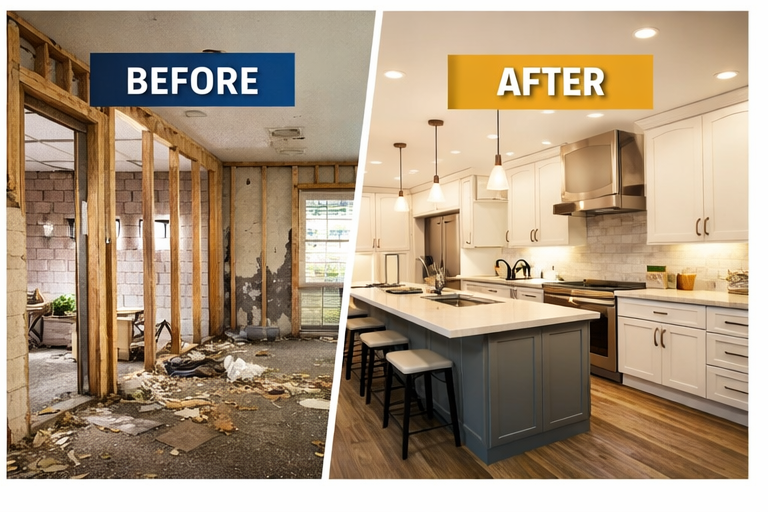
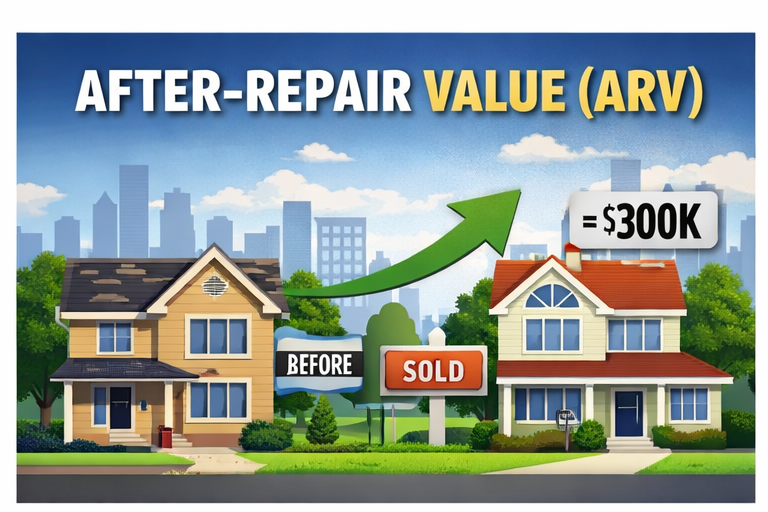
After-Repair Value (ARV) is one of the most important numbers in Real Estate Investing. It’s the estimated market value of a property after it has been fully renovated to a target “finished” condition. In simple terms: ARV answers the question, “What will this property be worth once the work is done?”
Whether you’re a homeowner trying to understand an investor offer, a wholesaler pricing a deal, or a flipper building a rehab budget, ARV directly affects the numbers that matter most: purchase price, rehab scope, financing, and profit.
What ARV Really Means
ARV is not the house’s current market value. It’s what it should sell for after repairs, based on what similar renovated homes have recently sold for in the same market.
ARV is used to:
- Price Fix-And-Flip deals
- Determine Maximum Allowable Offer (MAO)
- Support private lender or hard money underwriting
- Build accurate rehab budgets and timelines
- Create confidence for end buyers and investors
Why ARV Matters So Much
ARV is the “top of the equation.” Most real estate investing formulas work backward from ARV:
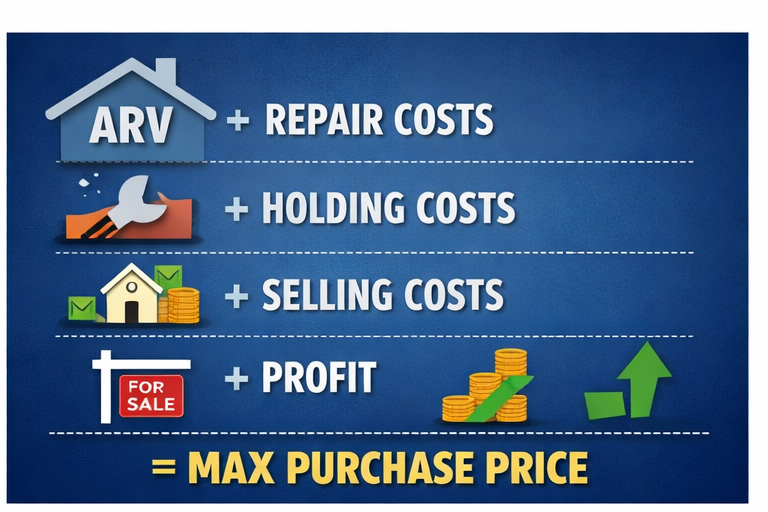
ARV − (Rehab + Holding + Selling Costs + Profit) = Maximum Purchase Price
If ARV is inflated, everything downstream is wrong:
- You overpay
- You under-budget rehab
- You underestimate risk
- You lose profit—or lose money
If ARV is conservative and accurate:
- Your offer is defensible
- Your budget is realistic
- Your profit is protected
- Your lender and buyer trust the deal
How To Calculate ARV Step-By-Step
ARV comes from Comparable Sales (“Comps”). The goal is to determine what the market will pay for homes comparable to your property after renovations.
Step 1: Define The Finished Product
Before you pull comps, define what “after repair” means for your property.
Ask:
- What will the home look like after rehab?
- What will the bed/bath count be?
- Will the basement be finished?
- What level of finishes: basic rental grade, mid-grade retail, or high-end?
ARV should reflect the finished condition you plan to deliver.
Step 2: Pull The Best Comps
Strong ARV estimates use comps that are:
- Recently sold (ideally within 3–6 months)
- Close by (same neighborhood when possible)
- Similar in size (sq ft range matters)
- Similar in layout (beds, baths, garage, basement)
- Similar condition (renovated if you’re estimating ARV)
If you’re flipping a property to “updated retail,” your comps should be updated retail sales—not distressed or dated listings.
Step 3: Narrow Comps By The Biggest Drivers
A good ARV comp match looks similar on these drivers:
- Location (same subdivision beats same city)
- Square Footage (price per sq ft is not perfect, but it’s a useful check)
- Beds/Baths (a 3/2 often sells differently than a 3/1)
- Basement (finished vs unfinished changes value)
- Garage (none vs 1-car vs 2-car)
- Lot size (especially when unusually large or small)
- Build type (ranch vs 2-story, duplex vs SFR, etc.)
Step 4: Make Adjustments (The Right Way)
Comps are rarely identical. Adjustments should be logical and conservative. Examples:
- If your subject has one less bathroom, ARV may be lower
- If a comp has a finished basement and yours won’t, reduce ARV
- If your home is 200 sq ft smaller, ARV likely trends lower
The cleanest method is to bracket your ARV:
- Identify a low comp, mid comp, and high comp
- Ask which comp your rehab will most closely match
- Set ARV where the evidence supports it (not where you hope it lands)
Step 5: Sanity Check With Active Listings And Pending Sales
Closed sales are the best evidence, but use active/pending listings as support:
- If your ARV is higher than everything currently listed renovated, it’s a red flag
- If multiple renovated homes are sitting on the market at your ARV, your ARV may be too high
- If pending sales cluster near your ARV, that’s a good sign
ARV Examples (Simple)
Example 1: Straightforward ARV
- Renovated comps sold at: $245K, $252K, $260K
- Similar size and features ARV estimate: ~$255K
Example 2: Wider Range
- Renovated comps sold at: $220K (smaller), $245K (similar), $275K (bigger + 2-car garage)
- Your home matches the $245K comp most closely, ARV estimate: ~$245K–$255K
What’s A “Good” ARV Range?
In most markets, ARV should be a tight and defensible range, not a guess.
A strong ARV usually looks like:
- A narrow spread between comps
- Similar size/condition/features
- Same neighborhood or immediate area
- Supported by multiple sold properties
If ARV comps are scattered or require heavy adjustments, ARV becomes less reliable, and you should increase your margin of safety.
Common ARV Mistakes To Avoid
Using Active Listings As ARV
Listings are asking prices, not sold prices. A house can be listed at $300K and sell at $270K—or sit for months.
Ignoring Condition And Finish Level
A “light update” ARV is not the same as a full modern renovation ARV. Your rehab scope must match your comps.
Overweighting Price Per Square Foot
Price per sq ft is useful, but it can mislead:
- Small houses often have a higher $/sq ft
- Layout, baths, garage, and neighborhood matter more than a simple average
Pulling Comps Too Far Away
A couple of miles can be a different market. School districts, subdivisions, and pocket neighborhoods can significantly affect property values.
Using Old Sales
Markets shift. Older sales can distort ARV, especially in a changing interest rate environment.
ARV In Real Estate Investing Formulas
ARV is most commonly used in two ways:
1) Maximum Allowable Offer (MAO)
A simplified MAO approach that many investors use:
- MAO = (ARV × Discount %) − Rehab Costs
Discount % varies based on strategy and risk. (Many investors reference 70%–80% as a starting point, then adjust based on market, holding time, and exit strategy.)
2) Pro Forma Planning
ARV helps build:
- Expected resale price
- Selling costs (agent fees, closing costs, concessions)
- Holding costs (interest, taxes, insurance, utilities)
- Profit targets and risk buffers
ARV For Homeowners Considering A Cash Offer
If you’re a homeowner and an investor mentions ARV, here’s what it usually means: they’re estimating what the home could sell for after they invest time and money into repairs and upgrades. Their offer is typically based on:
- ARV
- Repair costs
- Holding + selling costs
- Target profit
- Risk buffer
That’s why investor offers are often below retail market value because they’re taking on the rehab, the time, and the risk.
Quick ARV Checklist
Before you commit to an ARV number, confirm:
- Comps are renovated if your ARV assumes renovated
- Comps are recent and nearby
- Beds/baths and square footage are comparable
- Your rehab scope matches the comp finish level
- ARV is supported by multiple sold properties
- You’ve left room for market shifts and surprises
Final Thoughts
ARV is the foundation of nearly every smart real estate deal. When ARV is accurate, everything becomes clearer: the rehab budget, the offer price, the profit margin, and the risk. When ARV is wrong, the deal is wrong, no matter how good it looks on paper.
If you want, tell me:
- Property type (SFR, duplex, etc.)
- City + neighborhood
- Bed/bath + sq ft
- Planned rehab level (basic, mid, high)
…and I’ll outline a comp selection plan and ARV range you can defend.