

Every homeowner preparing to sell eventually faces the same fork in the road: invest time and money into repairs before listing, or sell the property exactly as it stands today.
The as-is vs. repairs decision isn’t one-size-fits-all; it depends on your property’s condition, your financial situation, your timeline, and the specific market you’re selling into.
This guide breaks the decision down piece by piece, using real cost considerations and practical scenarios relevant specifically to Indiana homeowners.
Understanding the House As-Is vs Making Repairs Decision
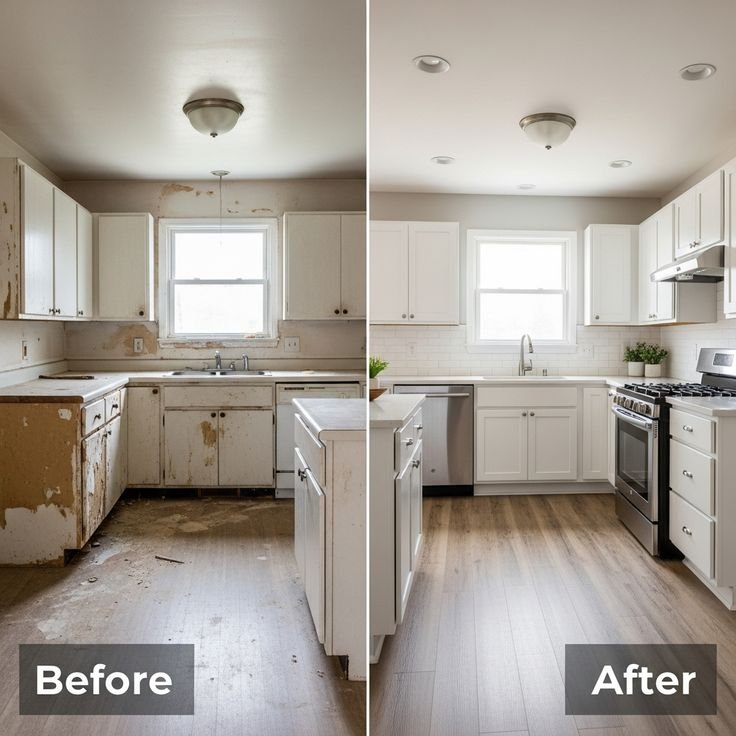
Before weighing the specifics, it helps to define what each path actually involves. Selling “as-is” means listing your property in its current condition, with no repairs, updates, or cosmetic improvements made beforehand, and typically communicating clearly to buyers that you won’t be negotiating repair credits after inspection.
Making repairs, by contrast, means investing time and money in fixing, updating, or improving the property before it ever reaches the market, to attract a broader pool of buyers and potentially a higher sale price.
Neither approach is inherently right or wrong. It really comes down to whether the expected benefits of repairs a higher price, a broader buyer pool, a smoother inspection process outweigh the costs, time, and risk involved in completing them.
The Case for Making Repairs Before Selling
A Broader Buyer Pool
Homes in move-in-ready condition qualify for the widest range of financing options and appeal to the largest pool of potential buyers, including those unwilling or unable to take on a fixer-upper. This broader pool can translate into more competition and, potentially, a stronger final sale price.
Fewer Inspection-Related Negotiations
A well-maintained, recently updated home is less likely to generate a long list of inspection findings that buyers use to negotiate price reductions or repair credits after an offer is accepted, reducing the risk of a deal falling apart or shrinking during negotiations.
Potentially Higher Appraised Value
Updated systems, fresh finishes, and resolved maintenance issues can support a stronger appraisal, which matters significantly for buyers relying on financing, since a low appraisal can derail a sale entirely regardless of what price the buyer originally agreed to.
A Faster Traditional Sale in Some Cases
A move-in-ready home in good condition often generates faster buyer interest through a traditional listing than a home requiring significant work, since buyers can more easily picture themselves moving in without a lengthy renovation.
The Case for Selling As-Is
No Upfront Cash Investment Required
Repairs cost real money, often more than homeowners initially expect once contractor estimates come in. Selling as-is avoids this upfront financial burden entirely, which matters enormously for sellers without significant savings or access to financing for pre-listing improvements.
No Risk of Repairs Not Paying Off
Not every repair generates a return that justifies its cost. Sellers sometimes invest in updates that buyers don’t value as highly as expected, effectively losing money on improvements that didn’t meaningfully affect the final sale price.
Significantly Faster Timeline
Skipping repairs eliminates the weeks or months of renovation work that typically require, allowing a sale to move forward immediately rather than being delayed by contractor scheduling, permit approvals, or unexpected complications discovered mid-project.
Reduced Stress and Complexity
Managing contractors, coordinating repair timelines, and living in or maintaining a property mid-renovation adds genuine stress to an already significant life transition. Selling as-is removes this entire layer of complexity from the process.
A Real Option for Properties That Wouldn’t Qualify for Traditional Financing Anyway
Homes with significant structural issues, code violations, or safety hazards may not pass a traditional buyer’s inspection or appraisal requirements regardless of cosmetic repairs, making an as-is sale to a cash buyer the more realistic path from the start.
House As-Is vs Making Repairs: Running the Real Numbers
To make this decision concrete, consider a hypothetical Indiana home valued at approximately $180,000 in good condition, but currently needing an estimated $20,000 in repairs (roof, HVAC, and cosmetic updates) to reach that condition.
House As-Is vs Making Repairs: A Side-by-Side Cost Comparison
Path One: Make the Repairs
- Estimated repair costs: $20,000
- Estimated time to complete repairs: 4-8 weeks
- Potential sale price after repairs: approximately $180,000
- Traditional listing timeline after repairs: 4-8 weeks
- Commission (6%): approximately $10,800
- Estimated holding costs during repair and listing period: $3,000-$5,000
- Estimated net proceeds: approximately $144,000-$146,000
- Total time from decision to closing: 3-4 months
Path Two: Sell As-Is
- Cash offer accounting for needed repairs: approximately $150,000-$155,000
- No repair costs
- No commission
- Closing costs typically covered by buyer
- Estimated net proceeds: approximately $150,000-$155,000
- Total time from decision to closing: 1-3 weeks
In this illustrative example, selling as-is actually nets a comparable or even somewhat higher result once repair costs, commissions, and holding costs are factored in, while taking a fraction of the time.
Every property’s specific numbers will differ, but this exercise illustrates why the “house as-is vs. repairs” decision often isn’t as clear-cut as “repairs always mean more money.”
The Hidden Costs Often Left Out of the Repair Calculation

Many sellers weighing this decision focus only on the direct contractor costs, overlooking several additional expenses that can meaningfully affect the final comparison.
Permit Fees and Inspection Requirements
Certain repairs, particularly electrical, plumbing, or structural work, often require permits and follow-up inspections in many Indiana municipalities.
These add both direct fees and, often more significantly, additional time to a repair timeline that homeowners frequently underestimate when planning their project.
Temporary Living or Storage Costs
Major repairs sometimes require temporarily relocating, especially if a home’s kitchen, bathroom, or HVAC system is out of commission during the work. These temporary living costs, along with storage fees for furniture or belongings, are easy to overlook when initially estimating a renovation budget.
Extended Holding Costs Beyond the Repair Period
Mortgage payments, property taxes, insurance, and utilities continue to accrue not just during repairs, but throughout any additional time a subsequent traditional listing takes. A repair timeline that runs longer than expected, which happens often, correspondingly extends these holding costs.
The Opportunity Cost of Your Time
Coordinating contractors, sourcing materials, managing timelines, and handling the inevitable unexpected issues that arise during renovation work all require significant time and mental energy a cost that doesn’t show up on any invoice but is very real for sellers already managing other life responsibilities.
Risk of Uncovering Additional Problems Mid-Repair
It’s extremely common for contractors to discover additional issues once work begins, such as water damage behind a wall, outdated wiring that doesn’t meet current code, or plumbing problems not visible during initial estimates.
These discoveries can significantly increase both cost and timeline beyond original projections, a risk that simply doesn’t exist when selling as-is.
Understanding How Buyers Actually Perceive Repairs
Not All Repairs Are Valued Equally by Buyers
Sellers sometimes assume any investment in their home will be reflected proportionally in buyer interest and offers.
In reality, buyers tend to value certain categories of repairs,s kitchens, bathrooms, and major systems like roofing and HVA, C considerably more than others, like elaborate landscaping or high-end finishes that reflect a seller’s personal taste rather than broad buyer appeal.
The Diminishing Returns of Over-Improvement
Investing heavily in a home that then becomes the most expensive property on its block, relative to comparable homes nearby, often doesn’t generate a proportional return, since buyers’ willingness to pay is frequently anchored to neighborhood norms regardless of how much a specific seller has invested.
Buyer Psychology Around “Move-In Ready” Marketing
Homes marketed as genuinely move-in ready do generate real psychological appeal; buyers can more easily picture themselves in the space without the stress of a future renovation project hanging over the purchase decision.
This buyer psychology is a genuine factor in the house-as-is vs making repairs decision, though it needs to be weighed against the actual, out-of-pocket cost required to achieve that positioning.
Financing Considerations for Each Path
How As-Is Sales Interact With Buyer Financing
Homes sold as-is to a traditional, financing-dependent buyer can sometimes encounter appraisal or underwriting complications if the property’s condition doesn’t meet a lender’s minimum standards, which is exactly why as-is sales work best with cash buyers who aren’t subject to these requirements.
How Sellers Can Finance Their Own Repairs
Sellers choosing the repair path without sufficient cash on hand sometimes explore options such as home equity lines of credit, personal loans, or contractor financing.
Each of these options adds its own cost, interest, fees, and repayment obligations that should be factored into any honest comparison between the two paths.
The Role of 203(k) and Renovation Loans for Buyers
Some buyers use renovation-specific financing, like FHA 203(k) loans, specifically to purchase homes needing work and finance the repairs as part of their mortgage.
Understanding that this financing option exists for buyers can sometimes make selling as-is more viable through a traditional listing than sellers initially assume, expanding the buyer pool beyond cash buyers alone, though this path still generally takes considerably longer than a direct cash sale.
Regional Cost Context Across Indiana
Repair and renovation costs vary somewhat across different parts of the state, driven by differences in local labor rates, material availability, and permitting requirements.
Homeowners in the Chicago-adjacent Northwest Indiana region sometimes face slightly higher contractor rates than more rural parts of the state, reflecting the broader cost environment shared with the neighboring metro area, even as overall housing costs remain considerably more affordable than Chicago itself.
Getting current, local estimates rather than relying on national averages or outdated assumptions remains essential regardless of which part of the state a property is located in, since even neighboring counties can see meaningful variation in typical contractor pricing and availability.
Talking to Multiple Professionals Before Deciding
Given how much this decision depends on accurate, up-to-date information, sellers benefit from gathering multiple perspectives before committing to a path. Getting estimates from at least two or three contractors helps identify a realistic cost range rather than relying on a single quote that may not reflect typical market rates.
Similarly, comparing a real estate agent’s opinion of potential post-repair value with an actual cash offer for the property as-is provides two concrete, comparable data points rather than abstract assumptions about which path is likely to net more.
This kind of direct, multi-source research consistently leads to better-informed decisions than choosing a path based on general rules of thumb alone.
When Making Repairs Genuinely Makes Sense
You Have the Cash Available Without Financial Strain
If you can comfortably afford repair costs without depleting emergency savings or taking on debt, and you have reasonable confidence the specific repairs will generate a solid return, making improvements before listing can be the right call.
Your Home Needs Only Minor, High-Impact Updates
Cosmetic improvements like fresh paint, deep cleaning, or minor landscaping often cost relatively little and can meaningfully improve buyer perception, unlike major structural repairs, which offer a less certain return.
You Have Flexible Time Before You Need to Sell
Sellers without an urgent deadline have the luxury of absorbing a longer repair-and-listing timeline without the pressure that a tight deadline would create.
Your Local Market Strongly Rewards Move-In-Ready Condition
In particularly competitive markets or neighborhoods where move-in-ready homes command a significant premium, repairs may yield a stronger return than in markets where buyers are more accepting of a home that needs some work.
When Selling As-Is Genuinely Makes Sense
You Don’t Have the Cash for Repairs
If funding repairs would require taking on debt or depleting savings you can’t afford to lose, selling as-is avoids this financial risk entirely.
Your Timeline Doesn’t Accommodate a Renovation Period
Job relocations, financial emergencies, or other time-sensitive circumstances often make the multi-week or multi-month repair timeline simply impractical, regardless of the theoretical financial upside.
Your Home Needs Extensive, Costly Repairs
When the scope of necessary work a new roof, foundation issues, outdated electrical or plumbing is substantial, the math frequently favors selling as-is rather than investing heavily with uncertain returns.
You’ve Inherited a Property You Don’t Want to Manage
Heirs managing a property from out of state, or juggling other responsibilities, often find the complexity of coordinating repairs from a distance far outweighs any potential financial benefit.
You Simply Want Certainty and Simplicity
Some sellers value predictability and a straightforward process over maximizing every possible dollar, and there’s nothing wrong with prioritizing peace of mind over squeezing out the highest theoretical sale price.
House As-Is vs Making Repairs: A Decision Framework
Working through a few honest questions can help clarify which path fits your specific situation:
Do I have the cash available for repairs without financial strain? If not, this alone often settles the question of whether to sell as-is vs. make repairs in favor of selling as-is.
What specific repairs does my home actually need, and what do they typically cost? Get real, current contractor estimates rather than guessing, since assumptions based on outdated information often lead to poor decisions.
What’s my actual timeline? A flexible timeline makes the repair path a realistic option; an urgent one generally points toward selling as-is.
What do comparable renovated properties in my specific neighborhood actually sell for, compared to as-is properties? This local, specific data point matters more than general assumptions about repairs “always” increasing value.
How do I personally weigh certainty versus potential upside? Some sellers genuinely prefer the predictability of a cash sale even when the numbers are close, while others prefer to maximize potential proceeds even with more risk and effort involved.
How This Plays Out Differently Across Indiana
Older Housing Stock in Cities Like Gary and Hammond
Homes in these markets often carry more significant repair needs given their age, making the as-is path particularly relevant for sellers facing costs that could easily exceed what renovation would realistically add to the sale price.
Established Suburbs Like Griffith and Merrillville
With generally younger or better-maintained housing stock, the repair path may make more sense here, since smaller-scale updates often see a more favorable return in these consistently in-demand markets.
Growing Communities Like Valparaiso
With new construction adding competition, existing-home sellers weighing repairs should consider how their updated property would compare with newer alternatives, which can temper the return on an extensive renovation investment.
Weighing the Emotional Side of the Decision Alongside the Numbers
While cost comparisons and timelines provide the analytical foundation for this decision, it’s worth acknowledging that emotional factors also play a genuine role.
Some sellers feel a strong personal desire to present their home in the best possible light, taking pride in leaving it well maintained for its next owner, even if the numbers suggest that selling as-is would be financially comparable or better.
Others feel considerable relief at the idea of walking away from a property without investing further time, money, or emotional energy into a home they’re ready to move on from, particularly if the property is tied to a difficult chapter, a divorce, a loss, or a stressful financial period.
Neither instinct is wrong, and acknowledging your own genuine priorities alongside the financial analysis tends to produce a decision you’ll feel more at peace with, rather than one driven purely by spreadsheet math that doesn’t account for how you actually want to experience this transition.
Common Questions About This Decision
Is selling as-is always the faster option?
Yes, essentially always, since it removes the repair timeline entirely from the process, regardless of which specific repair path might otherwise have been chosen.
Does selling as-is always mean a lower price?
Not necessarily, once repair costs, commissions, and holding costs are factored into a genuine, apples-to-apples comparison, as illustrated in the numbers example above.
Can I sell as-is even if my home needs extensive work?
Yes. Cash buyers specifically purchase properties in any condition, making this path realistic even for homes that wouldn’t qualify for traditional financing in their current state.
Should I get a professional inspection before deciding?
It can help clarify exactly what repairs your home needs and their likely cost, giving you more concrete information to weigh rather than relying on assumptions.
Is there a middle-ground option?
Some sellers choose to complete only the most cost-effective, high-impact repairs while leaving larger, less certain-return projects undone, effectively blending both approaches based on which specific repairs make clear financial sense.
A Note on This Guide
This overview of the house-as-is vs. repairs decision offers general guidance based on common patterns and illustrative examples, rather than a substitute for advice specific to your property.
Actual costs, potential sale prices, and market conditions vary significantly by property and location. Consulting a local contractor for current repair estimates and a real estate professional or cash buyer for property-specific guidance provides the most accurate picture for your particular situation.
The Bottom Line
The house-as-is vs. making repairs decision ultimately comes down to your specific financial situation, timeline, and property condition, not to a universal rule that favors one path over the other.
Running the real numbers for your specific property, being honest about your available time and resources, and understanding your local market’s dynamics will lead to a more confident answer than any general assumption about which approach “always” makes more sense.
For many Indiana sellers, especially those facing significant repair needs, tight timelines, or limited cash reserves, selling as-is to a direct cash buyer offers a genuinely competitive alternative to the traditional repair-and-list approach — not just a fallback option but a legitimate path worth seriously considering from the very start.