

A cash offer is only as good as the money behind it. Before you take your home off the market, verify the cash buyer’s proof of funds and confirm they can actually close.
Too many sellers accept a confident phone call and a one-page PDF at face value. Weeks later, the buyer disappears, asks for a lower price, or admits they were still “lining up investors.”
The good news is that checking a buyer’s funds is not complicated. With the right documents and a few phone calls, you can separate real buyers from pretenders in a day or two.
This guide explains what proof of funds is, how to check it step by step, the warning signs of fake documents, and the contract terms that protect you.
What Is Proof of Funds?
Proof of funds (POF) is a document showing that a buyer has enough available money to pay the purchase price and closing costs without a mortgage.
It is the cash buyer’s version of a mortgage preapproval. Instead of a lender saying “we will lend,” a bank shows the money already exists.
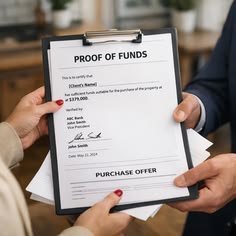
Acceptable Types of Proof of Funds
#1 Recent bank statement. A statement from a checking, savings, or money market account dated within the last 30 days, showing the account holder’s name and balance.
#2 Bank-issued POF letter. A letter on bank letterhead, signed by a bank officer, confirming the account holder and available balance.
#3 Brokerage statement. Statements from investment accounts can work, though stocks and funds may need to be sold before closing.
#4 Escrow or title company confirmation. Some buyers deposit funds with a title company early, which then confirms the money is on hand.
#5 Hard money or private lender commitment. This is not true cash, but a firm written commitment from a reputable lender may be acceptable if disclosed upfront.
Whichever type you receive, the process to verify cash buyer proof of funds is the same: confirm the document is real, current, and tied to the buyer on your contract.
Why Verifying Funds Matters So Much
Once you sign a contract, your home is usually off the market. Every day spent with an unfunded buyer is a day you could have spent with a real one.
#1 Lost time. A failed deal can cost you weeks or months, especially if the buyer stretches out the inspection period.
#2 Lost buyers. Other interested buyers move on while your home sits under contract with someone who cannot close.
#3 Price pressure. Unfunded buyers often renegotiate at the last minute, hoping you are too tired or desperate to say no.
#4 Missed deadlines. If you are facing foreclosure, a move, or a purchase of your own, a failed closing can create a chain of costly problems.
#5 Stigma. Homes that come back on the market after a failed contract can look suspicious to new buyers.
Taking the time to verify a cash buyer’s proof of funds before you sign is the simplest way to avoid all of these problems.
How to Verify Cash Buyer Proof of Funds: 8 Steps
Follow these steps in order. Together, they make it very hard for anyone to fake their way through a cash deal.
Step 1: Ask for Proof of Funds Before Signing
Request POF with the offer, not after you accept it. Serious cash buyers expect this request and usually have documents ready to send.
Step 2: Check the Date
The document should be dated within the last 30 days. Older statements only prove the money existed once, not that it is still there.
Step 3: Match the Name
The name on the proof of funds must match the buyer’s name on your contract. If the contract says “DYNASTY Home Buyers,” the statement should too.
If they do not match, ask for documents linking the two, such as an operating agreement showing the individual controls the company.
Step 4: Compare the Amount
The available balance should cover the full purchase price plus estimated closing costs. A $250,000 offer backed by $180,000 in the bank is not a cash offer.
Step 5: Contact the Bank Independently
This is the most important step to verify a cash buyer’s proof of funds. Look up the bank’s phone number yourself on its official website. Never use the number printed on the document.
Banks usually will not share balances without the account holder’s written permission. Ask the buyer to sign an authorization so the bank can confirm the funds with you or your title company.
Step 6: Let the Title Company Help
Title and escrow companies verify funds regularly. Share the POF with your closing agent and ask them to confirm it with the issuing bank.
Step 7: Require Meaningful Earnest Money
A sizable earnest money deposit, delivered quickly to the title company, is a practical test. Buyers without real funds often stall at this step.
Step 8: Recheck Before Closing
Money can move. For longer contracts, ask for an updated statement a few days before closing to confirm the funds are still available.
Signs of Fake or Weak Proof of Funds
Editing software makes it easy to alter a PDF. When you verify cash buyer proof of funds, watch closely for these warning signs.
#1 Mismatched fonts or spacing. Numbers that look slightly different in size, color, or alignment may have been edited.
#2 No account details at all. Some redaction is normal, but a document with no bank name, account holder, or date proves nothing.
#3 A generic letter. Letters without a bank officer’s name, title, and direct contact information are easy to fake.
#4 Someone else’s money. A statement in a “partner’s” or “investor’s” name means the buyer on your contract may not control those funds.
#5 Unusual sources. Foreign accounts, cryptocurrency balances, or obscure online banks are harder to verify and may take longer to move.
#6 Funds that are not liquid. Retirement accounts, real estate equity, or business assets cannot always be converted to cash quickly.
#7 Refusal to authorize verification. A buyer with real money rarely objects to a bank or title company confirming it.
#8 Excuses and delays. “I’ll send it after inspection” or “my partner handles that” are signs you should slow down.
Special Situations to Watch For
Not every cash buyer pays from a single personal checking account. These common setups are legitimate, but each needs a little extra checking.
LLCs and Business Buyers
Many investors buy through a limited liability company. Ask for the LLC’s bank statement and confirm the company is active in your state’s business registry.
If the funds sit in a personal account, ask for proof that the person signing controls the LLC.
Hard Money and Private Lenders
Some “cash” buyers actually use short-term loans from hard money lenders. That is not cash, and the loan can still fall through.
Ask for a written loan commitment, call the lender directly, and confirm whether an appraisal or inspection is required to fund.
Self-Directed Retirement Accounts
Investors sometimes buy with a self-directed IRA. The funds are held by a custodian, so ask for a statement or letter from that custodian, not the investor.
1031 Exchange Funds
In a 1031 exchange, a qualified intermediary holds the buyer’s sale proceeds. A letter from the intermediary confirming the available balance is the right proof.
Money Spread Across Several Accounts
It is fine if funds come from multiple accounts. Simply verify cash buyer proof of funds for each one and confirm the combined total covers the full amount.
Contract Terms That Protect You
Checking documents is only half the job. The purchase agreement itself should give you a way out if the buyer’s money turns out to be imaginary.
#1 Proof of funds deadline. Require verified POF within a set number of days, such as two or three business days after signing.
#2 Seller’s right to cancel. State that you may cancel the contract if acceptable proof of funds is not delivered by that deadline.
#3 No financing contingency. A true cash contract should not let the buyer back out because they could not get a loan.
#4 Earnest money terms. Set a meaningful deposit, a short delivery deadline, and a clear date when it becomes nonrefundable.
#5 Verification authorization. Include language allowing the title company to confirm funds with the buyer’s bank.
#6 Firm closing date. A specific date, not “on or about,” prevents an unfunded buyer from dragging things out.
A local real estate attorney can add these protections for you. Strong terms make it far easier to verify a cash buyer’s proof of funds and act quickly if something is wrong.
Protect Yourself From Wire Fraud and Closing Scams
Verifying funds also means making sure the money reaches you safely. Real estate closings are a favorite target for scammers because large sums move quickly.
#1 Use a reputable title company or attorney. Choose one you have researched yourself, with a real office and solid reviews.
#2 Confirm wire instructions by phone. Call your closing agent at a number you found independently before sending or receiving any wire details.
#3 Distrust last-minute changes. Emails announcing “new” bank instructions are a classic fraud tactic. Verify every change by phone.
#4 Avoid overpayment checks. A buyer who sends more than agreed and asks you to wire back the difference is almost certainly running a scam.
#5 Never hand over the deed early. Do not sign the deed or give up keys until the closing agent confirms the funds have cleared.
These habits take only minutes and can protect the largest payment you may ever receive.
Frequently Asked Questions
How can I verify cash buyer proof of funds quickly?
Check the date, name, and balance on the document, then have your title company confirm it with the bank using a phone number found independently.
Will a bank tell me how much money a buyer has?
Usually not without the account holder’s written authorization. Ask the buyer to sign one, or let your title company handle the confirmation.
Is it rude to ask for proof of funds?
Not at all. It is a standard request in cash sales, and serious buyers expect it. A buyer who is offended by the question is a warning sign.
Can a buyer redact parts of their bank statement?
Yes. Hiding account numbers and transaction details is reasonable. The bank name, account holder name, date, and balance should remain visible.
How old can a proof of funds document be?
Most sellers and title companies want documents dated within the last 30 days. Anything older should be updated before you accept the offer.
What if the buyer is using a hard money loan?
Then it is not a true cash offer. Ask for a written lender commitment and treat the deal like a financed sale with a higher chance of delays.
Final Thoughts
A cash offer means nothing until the money is confirmed. Taking a day to verify cash buyer proof of funds can save you weeks of wasted time and thousands in lost value.
Ask for proof upfront, match every name and number, call the bank independently, and let your title company do its job. Back it all up with strong contract terms.
Real buyers will cooperate without hesitation. If someone resists every effort to verify a cash buyer’s proof of funds, you have your answer before the deal ever begins.
