
Understanding a Cash Offer on a House: A Seller’s Guide
You’ve put your home on the market, and two proposals land on the table: one buyer offers $315,000 using a standard bank loan, while another puts up $300,000 as an all-cash offer.
In a competitive market, industry data reveals that sellers frequently choose the lower number, intentionally sacrificing thousands of dollars for a specific kind of peace of mind.
When comparing a cash offer to a financed bid, many owners choose cash for greater certainty. To the uninitiated, walking away from money seems foolish, but the decision usually comes down to the certainty of the “cash-to-close”—the actual funds required to finalize the deal.
Think of the difference like settling a bill at a busy restaurant.
A traditional mortgage buyer is like a customer waiting for a credit card transaction to clear, hoping the machine doesn’t decline due to a bank error or connection issue.
In contrast, a cash offer on a house is the equivalent of a patron laying a crisp $100 bill on the table; the transaction is verified and free from the worry that a third party, in this case, a lender, will halt the process.
Despite the dramatic name, these transactions rarely involve a briefcase full of physical currency.
If you’re wondering “what does a cash offer on a house mean,” it simply refers to immediately available funds with no financing contingency.
In practice, “cash” means the buyer has liquid funds ready to wire, eliminating the need for a financing contingency.
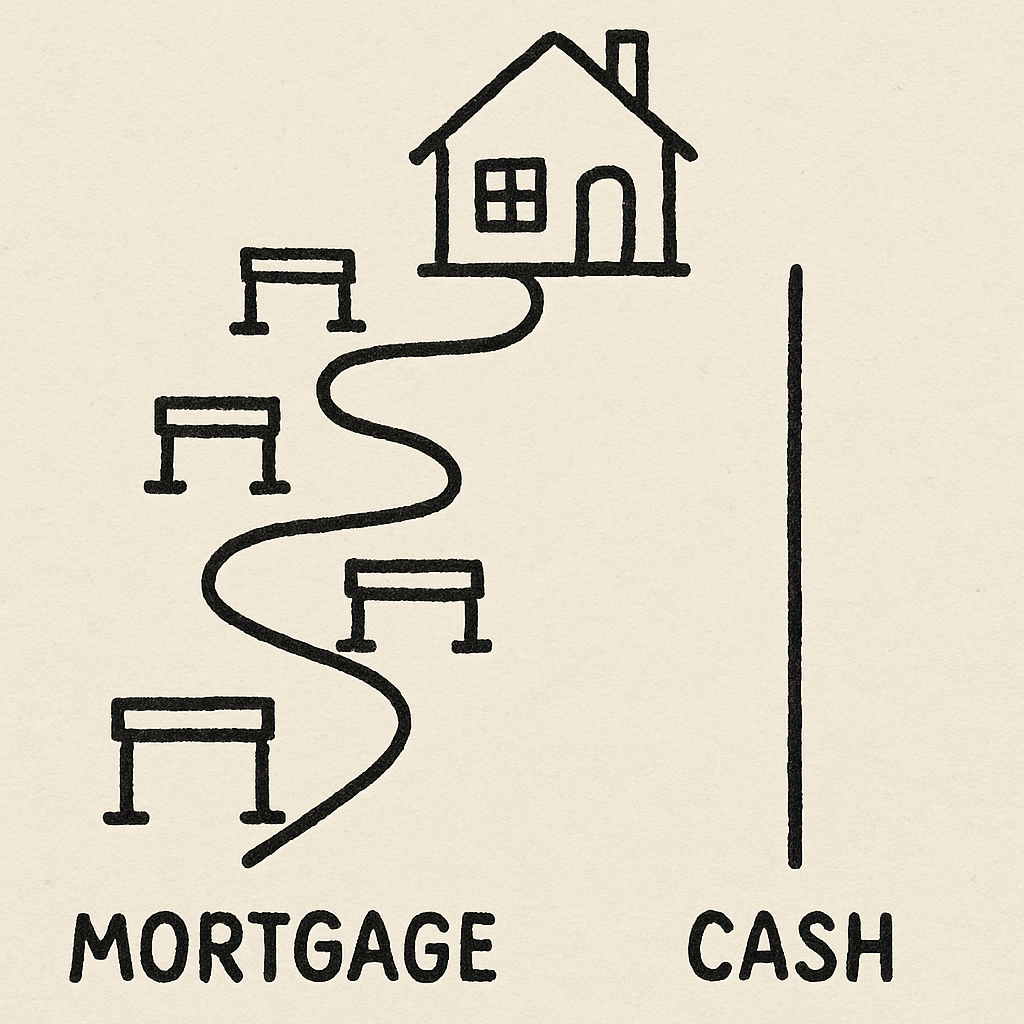
This common contract clause typically allows a buyer to back out if their loan is denied, but without a lender involved, the path to the closing table becomes a straight line rather than an obstacle course.
Speed is the ultimate by-product of removing the bank from the equation.
While a mortgage-backed purchase often takes 30 to 45 days to navigate underwriting and appraisals, a real estate cash offer creates significant “closing timeline compression.”
By bypassing the slow machinery of institutional lending, these deals can often finalize in as little as two weeks, turning a stressful month of waiting into a quick, certain sale.
That’s the appeal behind quick cash buyers whose postcards promise a quick cash offer or quick cash for house—less waiting, fewer moving parts.
What Does a Cash Offer on a House Actually Mean?
When people ask what these offers entail, they often imagine a cinematic exchange of currency.
In reality, making a cash offer on a house simply means the buyer has the funds available immediately and will not use a mortgage to close the deal.
This distinction eliminates the biggest hurdle in real estate: the bank. Without a lender involved, the liquidity advantages for motivated home sellers are massive.
You aren’t waiting 45 days for a loan officer’s approval; you are simply waiting for a final wire transfer. For sellers, cash from a house sale arrives without lender delays.
However, having a high net worth isn’t the same as having cash. To make a valid cash offer, your money must be “liquid,” meaning it can be accessed and transferred within days, not months.
A seller generally won’t accept a promise based on equity tied up in your current home or a retirement account that takes weeks to verify.
You typically must provide “Proof of Funds” demonstrating accessible balances in specific types of accounts:
- Standard checking or savings accounts
- Money market accounts
- Certificates of Deposit (CDs) nearing maturity
- Brokerage accounts with settled cash positions
Since you are bypassing the mortgage process, you are also removing the lender’s strict safety nets. In a traditional sale, if a bank’s appraisal comes in lower than the purchase price, the financing and the deal often collapse.
Cash buyers sign an all-cash purchase agreement that effectively waives this appraisal requirement.
This certainty is powerful, but it begs the question: why would a seller frequently choose a lower cash price over a higher offer backed by a mortgage?
Cash Offer vs. Mortgage Offer: Why Sellers Choose the Lower Bid
It seems counterintuitive to accept less money for your biggest asset. Yet, when weighing the pros and cons, sellers often prioritize “certainty” over “top dollar.”
They effectively pay a “convenience tax” by accepting a slightly lower bid or a quick cash offer to avoid the stress and uncertainty of a traditional bank loan.
Bank loans come with strict strings attached, the most significant being the appraisal. If you agree to sell for $300,000, but the bank’s appraiser values the home at $280,000, a “gap” creates an immediate crisis.
The buyer must cover the difference out of pocket, or the deal often dies.
Because cash buyers often waive the appraisal contingency, the sale price depends on the buyer’s offer. It does not depend on a third-party appraiser’s value.
Beyond valuations, traditional loans introduce “fall-through risk.” A buyer might appear qualified initially but be rejected weeks later due to a drop in credit score or a job change.
This creates a domino effect: if your buyer’s financing falls through, you might lose the house you were planning to buy. A quick cash offer eliminates this chain of uncertainty, as seen in the trade-offs below:
- Mortgage Closing: High risk of appraisal gaps, 30–60 day timeline, reliant on strict underwriting.
- Cash Closing: No appraisal requirement, 7–14 day timeline, reliant only on proof of funds.
While the speed is appealing, it relies entirely on the buyer actually having the money they claim. Without a bank vetting them, the burden of verification shifts to you.
When working with quick-cash buyers, the next step is critical. Confirm the buyer has cash before you take your home off the market.
How to Verify Proof of Funds Without Compromising Your Security
To validate a real estate cash offer, sellers demand a “Proof of Funds” (POF) letter. This document serves as a financial passport, proving that you have liquid assets to cover the purchase price immediately.
Unlike mortgage pre-approvals based on credit history, a POF is simply a current bank statement or official letter confirming your specific cash balance.
This signals to the homeowner that the deal is solid and funds are accessible without third-party lender delays.
In some markets, cash offer financing companies pre-approve buyers through a cash offer program, allowing them to present a POF backed by the provider even if they intend to refinance later.
Transparency is crucial, but oversharing creates security risks. When verifying proof of funds, you must master redaction to prevent identity theft.
You should blackout sensitive account numbers and unrelated transaction history, leaving only the bank’s letterhead, your name, the date, and the total balance visible.
Sellers typically reject statements older than 30 days because liquidity fluctuates, and they need assurance the money hasn’t been moved or spent since the document was generated.
Once the POF is accepted, the buyer solidifies their commitment through an Earnest Money Deposit (EMD).
This cash transfer, held in a neutral escrow account, typically equals 1% to 3% of the sale price to demonstrate “skin in the game.”
An earnest money deposit for non-financed buyers matters a lot. Without a loan denial, you do not have a safety net. Getting your money back depends on the protections in your purchase agreement.
Navigating the All-Cash Purchase Agreement: Which Contingencies Still Matter?
While a cash offer signals financial strength, it rarely means handing over money with zero questions asked. A common myth is that cash buyers waive every legal protection to close the deal immediately.
If you’re thinking, “I want to sell my home as is for cash,” remember that successful investors and savvy homebuyers still include specific contingencies to ensure they aren’t buying a money pit.
You are removing the “financing net” that banks require, but you should rarely remove the safety nets that protect you from buying a defective asset.
The most critical safeguard remaining is the inspection period. Even if a homeowner is selling a home as-is without repairs, a buyer typically retains the right to cancel the contract if they discover major structural issues, like a cracking foundation or black mold.
This clause protects the buyer’s Earnest Money Deposit.
To balance their need for safety with the seller’s desire for speed, cash buyers often shorten this window to just a few days, thereby avoiding inspection delays while still verifying the property’s condition.
To protect your investment without scaring off the seller, focus on these three non-negotiable checks:
- Title Search: Ensures no hidden liens, ex-spouses, or tax collectors have a legal claim to the property.
- Property Inspection: Confirms the plumbing, electrical, and structural systems are functional.
- HOA Review: Verifies that the homeowners association has enough money in reserve to prevent surprise fee hikes.
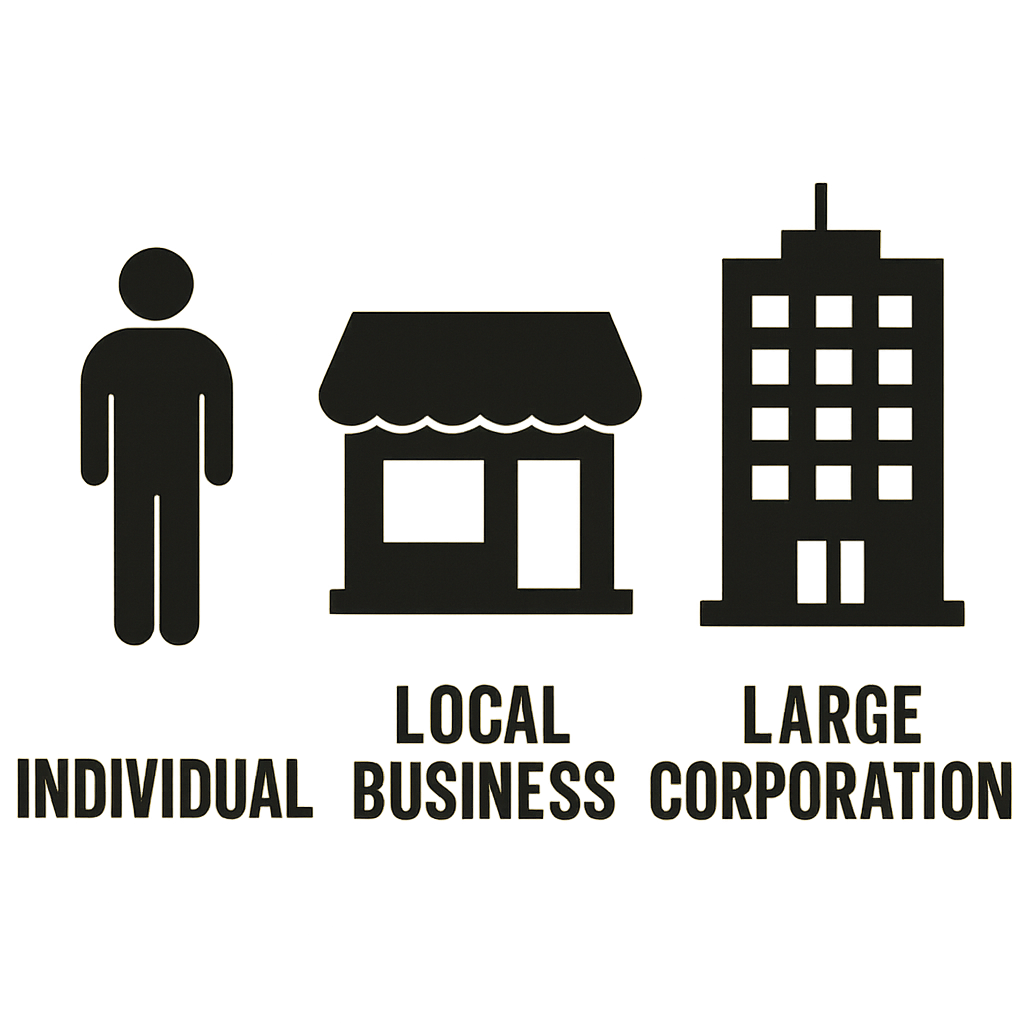
Understanding these clauses helps you distinguish between a serious individual investor and a corporate machine. While a family buying with cash might insist on a thorough inspection, institutional buyers operate with an entirely different playbook.
This distinction leads us to the various players in the market, ranging from tech-savvy “iBuyers” to local “We Buy Houses” companies.
From ‘iBuyers’ to ‘We Buy Houses’ Companies: Who Are These Cash Buyers?
Not all cash offers come from a wealthy retiree or a lucky lottery winner looking for a place to live. When you peel back the curtain, the market is dominated by distinct business entities that operate very differently from a standard family.
These quick cash buyers vary in how they evaluate homes, the timelines they propose, and their willingness to negotiate repairs or credits.
Understanding exactly who is signing the check helps you predict their behavior, their fee structures, and how likely they are to actually close the deal without trying to renegotiate at the last minute.
![A simple graphic showing three silhouettes representing an Individual, a Local Business, and a Large Corporation.]
On the high-tech end of the spectrum, you will find “iBuyers” or institutional investors.
These are large corporations that use an Automated Valuation Model (AVM), essentially a complex algorithm, to make near-instant offers on homes that are already in decent condition.
iBuyers determine home value by relying on massive amounts of local market data rather than a detailed physical walk-through, often charging a service fee similar to a realtor’s commission for the convenience of a quick exit.
Conversely, local real estate investors or “house flippers” specifically seek out homes that need significant repairs.
These are often the best distressed property sale options for owners dealing with inheritance issues or severe damage, as these buyers prioritize future potential over current perfection.
While generally reliable, sellers often ask whether “We Buy Houses” companies are legitimate because of their aggressive marketing tactics; the answer is usually yes, but these companies’ business models rely on buying properties at steep discounts to cover renovation costs and generate a profit.
Choosing between a corporate algorithm and a local renovator depends entirely on your home’s condition and your financial goals.
Some sellers might even qualify for a dedicated cash offer program that fronts the money to buy a new home before selling the old one, bridging the gap between convenience and market value.
Regardless of which entity you choose, the next step involves navigating a hyper-accelerated timeline that can feel overwhelming if you aren’t prepared for the speed of the transaction.
The 7-Day Sprint: Understanding the Escrow Process for Cash Sales
In a traditional home sale, you might spend weeks waiting for a bank to scrutinize the buyer’s credit history and tax returns. Cash deals skip this entire “underwriting” phase because there is no loan to approve, drastically shrinking the timeline. While the average closing time for cash real estate deals can vary based on local laws, the pace is essentially limited only by how fast the title company can prepare the paperwork, often compressing 45 days of work into just two weeks. This is exactly why a quick cash offer can close on a dramatically shorter schedule.
![A simple horizontal timeline showing the milestones from Day 1 to Day 10.]
Because the escrow process for cash home sales focuses strictly on legal transfer rather than loan approval, the schedule moves at a sprinting pace:
- Day 1-2: Open escrow and deposit “Earnest Money” (the good-faith deposit).
- Day 3-5: Title search (ensuring no hidden liens exist) and optional inspections.
- Day 6-9: Review final closing documents and verify Proof of Funds.
- Day 10: Final signing, wire transfer, and recording the deed.
Even without a bank involved, you still need a neutral third party to handle the exchange. The title company acts as the referee, ensuring the property is free of old debts or legal claims before money changes hands. They verify that the quick cash offer translates into a legitimate, clean transfer of ownership, protecting the buyer from accidentally inheriting the seller’s unpaid taxes or contractor bills.
Speed creates urgency, and unfortunately, scammers thrive on urgency. Wire fraud is a significant risk in these fast-paced transactions, where hackers may send fake wiring instructions that look identical to emails from your title officer. Pro-Tip: Always call your title company using a verified phone number—not the one in the email signature—before authorizing a transfer. With these safety protocols understood, you are ready to finalize the deal.

Your 3-Step Action Plan for Handling a Cash Real Estate Transaction
You no longer have to view cash offer flyers or aggressive mailers with suspicion. You’ve moved from wondering if these deals are legitimate to understanding exactly how the mechanics work. You now possess the ability to look past the flashy promise of “fast cash” and evaluate the deal based on cold, hard math and your personal timeline.
The decision ultimately rests on a clear trade-off: time versus money. If you choose to sell your home as-is for cash, you are likely accepting a lower sale price in exchange for certainty. However, that “discount” often disappears when you factor in the money you save on repairs, staging, and months of mortgage payments while the house sits on the market. You are trading potential future equity for immediate peace of mind.
Before you commit to a contract, execute this final seller’s checklist to ensure a secure transaction:
- Verify the Source: Demand a Proof of Funds letter dated within the last 30 days and call the bank to confirm the balance is accessible.
- Do the “Net” Math: Subtract the holding costs (taxes, utilities, mortgage) and repair bills you avoid to see if the lower cash offer is actually a better financial win.
- Confirm the “As-Is” Status: Ensure the contract explicitly states no repairs will be requested after the walk-through so your closing isn’t delayed.
While the buyer brings the money, remember that you control the asset. You can use the certainty of the deal to dictate the closing date or request a lease-back if you need more time to move. The negotiating power of non-contingent buyers is strong, but your ownership is the ultimate leverage. Real estate doesn’t have to be a six-month saga of anxiety and waiting games. You now have the tools to cut through the red tape and control the process. Trust your verification steps, weigh your options, and confidently sign the deal that gets you to your next chapter faster.