

If you’re transferring property between family members, adding a spouse to a title, or clearing up a title issue, you’ve probably come across the term “quitclaim deed.”
But before you sign one, it’s important to understand exactly what an Indiana quitclaim deed does and just as importantly, what it doesn’t do.
This guide covers what an Indiana quitclaim deed is, how it compares to a warranty deed, and when it makes sense (and when it doesn’t).
What Is an Indiana Quitclaim Deed?
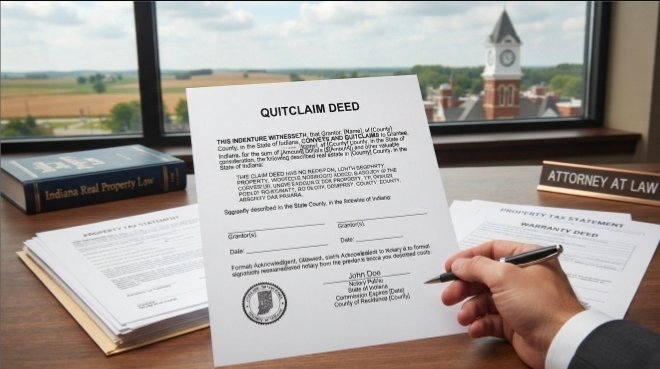
An Indiana quitclaim deed is a legal document used to transfer whatever ownership interest a person has in a property to another person, without making any promises about the quality of that ownership.
The person transferring the property (the grantor) simply “quits” or gives up their claim they don’t guarantee they actually own the property free and clear, or that there are no liens, unpaid taxes, or competing claims against it.
In short: a quitclaim deed transfers interest, not certainty. This makes it very different from a warranty deed, which comes with legal guarantees about the title’s condition.
Quitclaim vs. Warranty Deed in Indiana
Understanding the difference between a quitclaim deed and a warranty deed is critical before choosing which one to use.
| Feature | Quitclaim Deed | Warranty Deed |
| Guarantees clear titleNoYes | No | Yes |
| Protects buyer from liens/claims | No | Yes |
| Common use | Family transfers, title fixes | Traditional home sales |
| Level of buyer protection | Low | High |
| Typical use case | Non-arms-length transfers | Arms-length real estate transactions |
Because a quitclaim deed offers no protection against hidden liens, judgments, or ownership disputes, it’s rarely used in traditional Indiana real estate transactions between strangers.
A warranty deed specifically a general warranty deed is the standard in most Indiana home sales because it protects the buyer.
When Should You Use an Indiana Quitclaim Deed?
A quitclaim deed real estate transfer in Indiana works best when the parties already know and trust each other, or when there’s no real question about who owns the property.
Common situations include:
#1. Transferring Property Between Family Members
Adding a child, parent, or sibling to a deed or transferring full ownership to them is one of the most common uses of a quitclaim deed in Indiana.
#2. Adding or Removing a Spouse After Marriage or Divorce
Quitclaim deeds are frequently used to add a new spouse to a property title or to remove an ex-spouse’s name after a divorce settlement.
#3. Transferring Property Into a Trust
If you’re moving your home into a revocable living trust for estate planning purposes, a quitclaim deed is a simple way to make that transfer.
#4. Clearing Up a Title Defect (“Cloud on Title”)
Sometimes an old, unresolved ownership claim shows up during a title search perhaps from a former co-owner or an heir who never formally released their interest. A quitclaim deed can be used to have that person officially relinquish any claim.
#5. Transferring Property to an LLC or Business Entity
Real estate investors in Indiana sometimes use quitclaim deeds to transfer property they already own into an LLC for liability protection.
When You Should NOT Use a Quitclaim Deed
A quitclaim deed home sale in Indiana is generally not appropriate when:
● You’re buying property from a stranger or unrelated third party
● You want assurance that the title is free of liens, judgments, or back taxes
● A lender is involved and requires title insurance (most lenders won’t accept a quitclaim-only transfer for financed purchases)
● You need legal protection if a title dispute arises laterIn these cases, a warranty deed paired with a title search and title insurance is the safer choice.
How to File a Quitclaim Deed in Indiana
To be valid and enforceable, an Indiana quitclaim deed must:
● Be in writing and include a legal description of the property
● Identify the grantor (person giving up interest) and grantee (person receiving it)
● Be signed by the grantor in front of a notary public
● Be recorded with the County Recorder’s Office in the county where the property is located
● Recording the deed is a critical step an unrecorded quitclaim deed may not be enforceable against future claims or buyers, and it won’t show up in public property records.
Does a Quitclaim Deed Affect Property Taxes or a Mortgage?
Yes, potentially. Transferring property via quitclaim deed can:
● Trigger a reassessment of property taxes in some cases
● Violate a “due on sale” clause in an existing mortgage, giving the lender the right to call the full loan balance due
● Have gift tax implications if the transfer is not for fair market value
● Before using a quitclaim deed, it’s wise to check with a real estate attorney or tax professional about how the transfer might affect your specific situation.
Frequently Asked Questions
Does a quitclaim deed guarantee I own the property free and clear in Indiana?
No. A quitclaim deed only transfers whatever interest the grantor has it does not guarantee that interest is free of liens or competing claims.
Can I use a quitclaim deed to sell my house to a stranger in Indiana?
It’s not recommended. Most buyers and lenders expect a warranty deed for standard home sales because it offers legal protection that the quitclaim deed does not.
How much does it cost to file a quitclaim deed in Indiana?
Recording fees vary by county but are typically a modest flat fee plus a per-page charge. Contact your local County Recorder’s Office for exact costs.
Final Thoughts
An Indiana quitclaim deed is a fast, simple tool but it’s best reserved for transfers between parties who already trust each other, such as family members, spouses, or trusts.
When you’re buying or selling property on the open market, a warranty deed paired with title insurance offers far more protection.
If you’re unsure which deed fits your situation, consulting a real estate attorney or title company before signing anything is always the safer move.
