

A persistent real estate myth is that an outdated kitchen, mismatched paint, overgrown landscaping, or dated carpet automatically translates into a rock-bottom sale price.
For homeowners looking to sell ugly house as-is in Indiana, this misconception can lead to unnecessary anxiety, or worse, pressure to invest thousands of dollars into cosmetic renovations that don’t actually deliver a meaningful return.
The truth is more nuanced: an unattractive home can still hold significant value, particularly when marketed correctly and priced with an understanding of what buyers in this category are actually looking for.
This guide breaks down the real difference between cosmetic and structural issues, how “ugly” homes are valued in today’s market, and how to approach a sale that maximizes your return without sinking money into unnecessary upgrades.
Cosmetic Ugly vs. Structurally Compromised
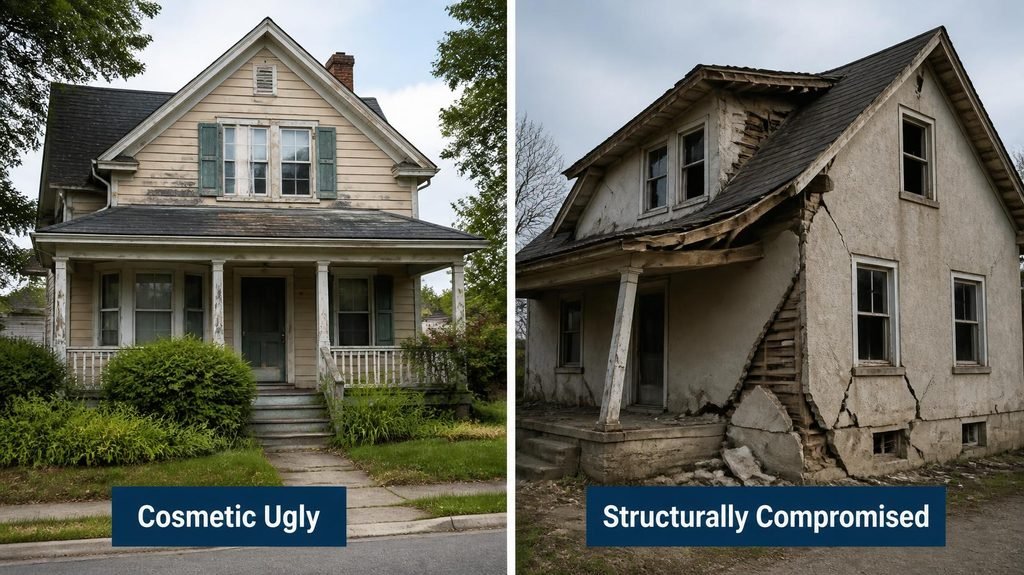
The single most important distinction to understand before deciding how to sell an ugly house as-is in Indiana is the difference between cosmetic imperfections and genuine structural problems.
These two categories differ greatly in how they affect value, buyer interest, and your overall selling strategy.
What Counts as Cosmetic
Cosmetic issues are surface-level and don’t affect the safety, structural integrity, or core functionality of the home. Common examples include:
- Outdated wallpaper, paint colors, or flooring
- Dated kitchen cabinets or countertops
- Overgrown landscaping or unkempt lawns
- Dated light fixtures or hardware
- Popcorn ceilings or outdated trim work
- Cluttered or heavily personalized decor
These issues absolutely affect first impressions and can influence how quickly a home sells, but they generally don’t reflect the property’s underlying quality or long-term value.
A home with excellent bones, solid foundation, updated major systems, and good structural integrity can look unattractive on the surface while still being a genuinely valuable property.
What Counts as Structural
Structural issues are a different matter entirely, and they typically have a much more significant impact on both value and buyer interest. These include:
- Foundation cracks or settling issues
- Roof damage or age-related failure
- Outdated or unsafe electrical systems
- Plumbing problems, including pipe deterioration or septic issues
- Water damage, mold, or moisture intrusion
- HVAC system failure or significant age
Understanding which category your home’s issues fall into is essential, because it directly shapes both your pricing strategy and your realistic expectations for the sale.
Why Cosmetic Ugliness Doesn’t Equal Low Value
Buyers who understand real estate, particularly investors, but increasingly savvy owner-occupants as well, recognize that cosmetic issues represent an opportunity rather than a dealbreaker.
Paint, flooring, and light fixtures are relatively inexpensive and straightforward to update compared to structural repairs, so a cosmetically outdated home can still command a fair price that reflects its true underlying condition.
In fact, many successful real estate investors specifically seek out cosmetically challenged properties precisely because the gap between purchase price and post-renovation value tends to be more favorable than with homes that need extensive structural work.
This dynamic favors sellers who know how to position their property correctly, rather than assuming an outdated appearance automatically means accepting a lowball offer.
When you sell an ugly house as-is in Indiana, particularly when the “ugly” is purely cosmetic, you’re often negotiating from a stronger position than you might initially assume, provided you approach pricing and marketing with a clear understanding of your home’s actual condition.
How Buyers Actually Evaluate “Ugly” Homes
Different buyer segments approach cosmetically challenged properties in very different ways, and understanding these perspectives can help you tailor your selling strategy effectively.
Investors and Flippers
Real estate investors specializing in renovation projects are often the ideal buyer for a cosmetically outdated but structurally sound home.
They typically have established contractor relationships, a clear sense of renovation costs, and a well-defined target profit margin, allowing them to make relatively quick, confident offers on properties that might intimidate a typical owner-occupant buyer.
Handy Owner-Occupants
Some buyers specifically seek out cosmetically dated homes because they want to customize finishes to their taste, or because they’re comfortable handling renovation work themselves to save money compared to buying an already updated property.
This buyer segment can sometimes offer competitive pricing, particularly if the location and structural condition of the home meet their needs.
Traditional Buyers Seeking Move-In Ready Homes
This buyer segment is least likely to be interested in a cosmetically outdated property, since they typically prioritize convenience and immediate livability over potential value.
If your goal is to market specifically to this buyer pool, some cosmetic updates may be worthwhile, though they come with upfront costs and time investment that not every seller wants to take on.
Deciding Whether to Update or Sell As-Is

One of the central decisions facing owners of a cosmetically outdated home is whether to invest in updates before listing or to sell ugly house as-is in Indiana without making changes.
This decision depends heavily on your financial situation, timeline, and the specific dynamics of your local market.
The Case for Minor Updates
In some cases, relatively low-cost, high-impact updates- a fresh coat of neutral paint, updated light fixtures, decluttering, and basic landscaping cleanup can meaningfully improve buyer perception without requiring a major financial investment.
These types of updates can sometimes expand your buyer pool to include traditional owner-occupants who might otherwise pass on a listing based on photos alone.
The Case for Selling As-Is
For homeowners without the time, capital, or desire to manage even minor updates, selling as-is remains a viable path, especially when marketing to investors or buyers who value structural soundness over surface aesthetics.
This approach eliminates upfront costs and the time investment associated with even minor renovation projects, allowing for a faster, more straightforward transaction.
Choosing to sell ugly house as-is in Indiana doesn’t mean accepting an unreasonably low offer.
It simply means adjusting your marketing strategy and buyer targeting to align with the property’s actual condition, rather than trying to compete directly with fully updated, move-in-ready listings.
Pricing Strategy for Cosmetically Outdated Homes
Pricing an ugly-but-structurally-sound home requires a nuanced approach. Rather than comparing directly to fully renovated properties in your area, it’s more accurate to look at comparable sales of similarly dated homes, or to work backward from renovated comparable sales by estimating the cost of updates a buyer would need to invest.
This approach, often referred to as the “after repair value” method in investment real estate circles, involves starting with the estimated value of the home once updated, then subtracting anticipated renovation costs and a reasonable profit margin for an investor buyer.
This calculation helps establish a realistic, defensible asking price that reflects your home’s true value rather than an arbitrary discount based purely on its appearance.
Working with an agent experienced in valuing distressed or dated properties can help ensure your pricing strategy accurately reflects your home’s condition without leaving money on the table simply because the property doesn’t show well in its current state, a common pitfall for anyone trying to sell an ugly house as-is in Indiana without professional guidance.
Marketing an Ugly But Solid Home
Effective marketing for a cosmetically challenged property requires a different approach than a typical move-in-ready listing.
Rather than relying primarily on aesthetic photography, emphasize the home’s genuine strengths: lot size, location, structural condition, updated major systems (roof, HVAC, electrical, plumbing), and any other factors that represent real, underlying value.
Being transparent about the property’s condition in your listing description helps attract serious buyers who understand what they’re evaluating, rather than generating interest from buyers who will simply walk away once they see the home in person.
Highlighting the renovation potential and realistic cost estimates for updates can help investor buyers move forward with confidence.
If you’re working with a real estate agent, look for one experienced in marketing to investor and renovation-minded buyer segments specifically, since this requires a different skill set than traditional residential marketing focused primarily on staging and curb appeal an important distinction if you’re serious about how to sell an ugly house as-is in Indiana without underselling it.
The Role of Professional Photography and Presentation
Even when selling as-is, professional photography remains valuable. Well-lit, well-composed photos that accurately represent the home’s condition without either exaggerating flaws or misleadingly hiding them help set appropriate buyer expectations while still presenting the property in its best realistic light.
Simple efforts like decluttering before photos, ensuring good lighting, and cleaning up obvious debris (even without addressing deeper cosmetic issues) can meaningfully improve how the property is perceived online, where most buyers begin their search regardless of the property’s ultimate condition.
Legal and Disclosure Considerations
Indiana law requires sellers to disclose known material defects, and this obligation applies regardless of whether a home’s issues are cosmetic or structural.
While purely cosmetic issues generally don’t carry the same disclosure weight as structural or safety-related defects, any known structural problems, past water damage, or other significant issues must be disclosed accurately to avoid potential legal exposure after closing.
Being upfront about your home’s condition, cosmetic and structural alike, protects you legally and helps build trust with serious buyers, particularly investors who will likely conduct their own thorough due diligence regardless of what’s disclosed upfront.
Common Mistakes to Avoid
Many sellers make avoidable mistakes when trying to sell an ugly house as-is in Indiana. One common error is assuming that because the home looks unattractive, it must be priced dramatically below market value for comparable, structurally similar properties.
This can leave significant money on the table, particularly if the issues are purely cosmetic rather than structural.
Another common mistake is investing heavily in updates without accurately calculating whether the return justifies the expense.
Not every renovation delivers dollar-for-dollar value at resale, and sellers should carefully evaluate which updates, if any, make genuine financial sense given their specific market and timeline.
Finally, failing to market specifically toward the right buyer segment, whether that’s investors, renovation-minded buyers, or a combination, can result in a longer time on market and more difficulty generating serious offers, even when the underlying property represents solid value.
Working With the Right Real Estate Professional
An agent experienced in distressed or dated property sales can make a significant difference in how successfully you navigate this process.
They can help you accurately assess whether your home’s issues are cosmetic or structural, develop a pricing strategy that reflects true value rather than an arbitrary discount, and market effectively to the buyer segments most likely to appreciate what your property genuinely offers.
This expertise is especially valuable when negotiating with investor buyers, who often have significant experience evaluating properties and may try to negotiate based on inflated repair cost estimates.
An agent who understands realistic renovation costs in your local market can help ensure you don’t leave unnecessary value on the table during negotiations.
Tips for a Successful As-Is Sale
- Get an honest assessment of cosmetic vs. structural issues. Let this distinction drive your entire pricing and marketing strategy.
- Price based on true value, not assumptions. Use comparable sales and after-repair-value calculations rather than guessing at a discount.
- Market to the right buyer segment. Investors and renovation-minded buyers are often your best audience for a cosmetically outdated home.
- Be transparent in your listing. Honest descriptions and accurate photos attract serious buyers and reduce wasted showings.
- Disclose known structural issues. Indiana law requires this regardless of whether your home’s overall condition is cosmetic or more significant.
Frequently Asked Questions
Will I get a fair price if I sell ugly house as-is in Indiana? Often, yes, particularly if the issues are cosmetic rather than structural. Buyers experienced in renovation projects understand the difference and often price accordingly, rather than assuming a purely cosmetic issue reflects poor underlying value.
Should I make any updates before selling an outdated home? It depends on your budget, timeline, and target buyer. Minor, low-cost updates can sometimes expand your buyer pool, but many sellers successfully sell as-is without investing in renovations, particularly when marketing to investors.
How is a cosmetically outdated home priced differently than a move-in-ready home? Pricing typically accounts for anticipated renovation costs a buyer will need to invest, working backward from an estimated post-renovation value rather than comparing directly to fully updated properties.
Final Thoughts
An outdated kitchen, dated flooring, or an unkempt yard doesn’t have to mean accepting a rock-bottom offer.
Understanding the real difference between cosmetic and structural issues, pricing based on genuine value rather than assumptions, and marketing specifically to the right buyer segment can help you achieve a fair, realistic outcome.
Whether you choose to invest in minor updates or move forward entirely as-is, the key to successfully navigating a sale like this is understanding your home’s true condition and communicating that value clearly.
With the right strategy, you can confidently sell an ugly house as-is in Indiana and still walk away with a price that genuinely reflects what your property has to offer.